


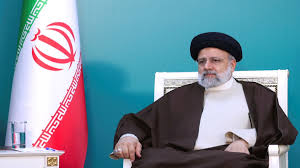
 Tehran, May 20: Iran’s hard-line President Ebrahim Raisi has long been seen as a protégé to Iran’s supreme leader and a potential successor for his position within the country’s Shiite theocracy.
News of his helicopter making what state media described as a “hard landing” on Sunday immediately brought new attention to the leader, who already faces sanctions from the U.S. and other nations over his involvement in the mass execution of prisoners in 1988.
Raisi, 63, previously ran Iran’s judiciary. He ran unsuccessfully for president in 2017 against Hassan Rouhani, the relatively moderate cleric who as president reached Tehran’s 2015 nuclear deal with world powers.
In 2021, Raisi ran again in an election that saw all of his potentially prominent opponents barred for running under Iran’s vetting system. He swept nearly 62% of the 28.9 million votes, the lowest turnout by percentage in the Islamic Republic’s history. Millions stayed home and others voided ballots.
The U.S. Treasury in 2019 sanctioned Raisi “for his administrative oversight over the executions of individuals who were juveniles at the time of their crime and the torture and other cruel, inhuman, or degrading treatment or punishment of prisoners in Iran, including amputations.” It also mentioned his involvement in the 1988 executions.
Iran ultimately is run by its 85-year-old supreme leader, Ayatollah Ali Khamenei. But as president, Raisi supported the country’s enrichment of uranium up to near-weapons-grade levels, as well as it hampering international inspectors as part of its confrontation with the West.
Raisi also supported attacking Israel in a massive assault in April that saw over 300 drones and missiles fired at the country in response for a suspected Israeli attack that killed Iranian generals at the country’s embassy compound in Damascus, Syria — itself a widening of a yearslong shadow war between the two countries.
He also supported the country’s security services as they cracked down on all dissent, including in the aftermath of the 2022 death of Mahsa Amini and the nationwide protests that followed.
The monthslong security crackdown killed more than 500 people and saw over 22,000 detained. In March, a United Nations investigative panel found that Iran was responsible for the “physical violence” that led to Amini’s death after her arrest for not wearing a hijab, or headscarf, to the liking of authorities.