


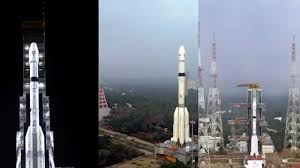
 New Delhi, Jan 28: Indian Space Research Organisation (ISRO) will hit a century by launching its 100th satellite – NVS-02 which is part of India’s Navigation with Indian Constellation (NavIC) abroad GSLV – from the Satish Dhawan Space Centre (SDSC) in Sriharikota near tomorrow.
SLV-E-01, whose director was space scientist and former President A P J Abdul Kalam, was the first mission to be launched from SDSC, Sriharikota on August 10, 1979. Since then, the ISRO has conducted 99 launches.
Additionally, as many as 537 launches have taken place at the Sounding Rocket Complex in Sriharikota after it became operational on October 9, 1971, with the flight of ‘Rohini-125’, a small sounding rocket.
Sriharikota, the spindle shaped island in Andhra Pradesh’s Nellore district situated in the backwater Pulicat Lake and sandwiched by Buckingham Canal on the West and Bay of Bengal on the East, was chosen by the Union Government in 1969 for setting up the country’s rocket launch station.
ISRO is now building its second launchpad in Kulasekarapattinam in Thoothukudi district in Tamil Nadu exclusively for launching small satellites which is geographically advantageous for the country.
Scientists say the Kulasekarapattinam spaceport will help save fuel as
satellites launched from here can directly travel towards south unlike those launched from Sriharikota which fly in the southeast direction after liftoff from the Sathish Dhawan Space Centre to avoid flying over Sri Lanka and takes a sharp manoeuvre towards the South Pole.
The spaceport will be operationalised in the next two years.
The 29 January mission aims to deploy the second-generation navigation satellites with the NavIC system to enhance India’s regional navigation capabilities.
NavIC, which is India’s answer to GPS, is designed with a constellation of seven satellites and a network of ground stations operating 24×7.
It offers two services—Standard Position Service (SPS) for civilian users and Restricted Service (RS) for strategic users.
It is a standalone navigation satellite system, which is currently being used on a regional scale but will be developed in the coming years as a ‘Made-in-India’ global satellite navigation system which will be at par with US’s GPS, Europe’s Galileo or China’s BeiDou.
In 2023, the Indian government directed all mobile phone manufacturers to make all their phone models compatible with NavIC, starting January 2023.