


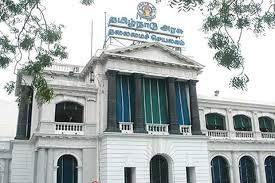
 The Tamil Nadu government is set to present the Interim Budget for the financial year 2026–27 in the State Legislative Assembly tomorrow.
This development comes as the assembly reconvenes amid heightened political and economic focus ahead of the upcoming state elections later this year.
The assembly session, which began on January 20 with the Governor’s address, will resume to take up the interim budget. Finance Minister Thangam Thennarasu is scheduled to formally table the interim financial statement at 9:30 a.m. at the Assembly Hall in the Secretariat, Chennai. The budget will be presented as a “vote-on-account”, allowing government expenditures to be authorised for the first few months of the new fiscal year.
An interim budget is typically prepared in an election year when a full budget with new schemes and policy directions is not customary; instead, it focuses on continuing expenditures and critical allocations necessary to keep the government running until a new administration takes charge. But this year’s interim budget may include significant announcements on welfare, infrastructure, and development, reflecting both governance priorities and political imperatives as elections draw closer.
On February 20, legislators are expected to deliberate on the Advance Demands for Grants and Supplementary Demands for the previous financial year (2025–26) to adjust additional expenditures. The duration of the session will be finalised by the Business Advisory Committee meeting.
The presentation of an interim budget in an election year underscores both administrative necessities and political strategy. While a vote-on-account usually refrains from introducing significant new schemes, expectations in Tamil Nadu are high that certain announcements may feature to appeal to various voter groups. Traditionally, interim budgets in the state — as seen in past years — have balanced essential government spending with targeted welfare measures suited to short-term priorities.
As the assembly gears up for detailed budget discussions, all eyes will be on the fiscal priorities set out by the Thennarasu-led finance ministry and how these align with broader socio-economic goals and electoral considerations in India’s southern state.