


Chennai, April 14
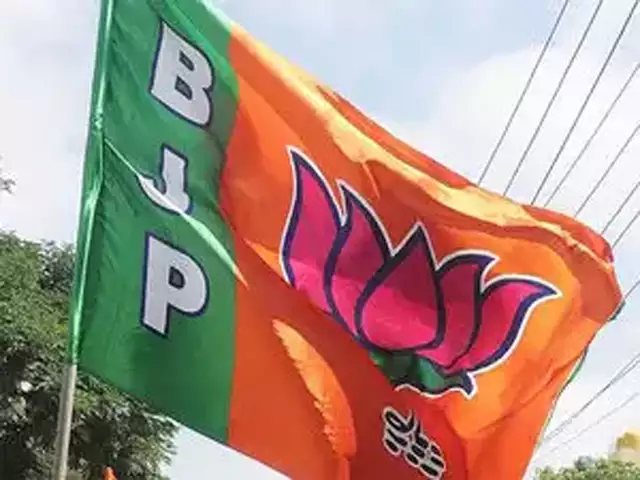
The Bharatiya Janata Party (BJP) on Tuesday released its manifesto for the 2026 Tamil Nadu Assembly elections, outlining an ambitious mix of welfare schemes, infrastructure expansion, women-centric initiatives and a strong law-and-order agenda.
The manifesto was unveiled by Union Minister J. P. Nadda, with the party seeking to position itself as a viable alternative by targeting economic distress, inflation and governance gaps under the incumbent administration.
At the core of the BJP’s poll promises is a broad financial support framework aimed at households and women. The party has pledged a monthly assistance of ₹2,000 to women heads of families, alongside a one-time grant of ₹10,000 to every household to ease financial burdens and stimulate consumption. In addition, it has promised three free LPG cylinders annually during key festivals including Pongal, Tamil Puthandu and Deepavali.
A significant thrust has been placed on women’s safety and empowerment. The manifesto proposes zero-FIR mechanisms for seamless crime reporting, enhanced protection for victims and witnesses, and the establishment of fast-track courts for crimes against women and children, including POCSO cases. It also promises 100% CCTV coverage in buses and periodic safety audits in educational institutions, coupled with better utilisation of the Nirbhaya Fund.
The party has also outlined measures to promote women-led enterprises, including interest-free loans up to ₹50 lakh for manufacturing units and a 20% procurement quota in government purchases for women-owned businesses.
In a bid to address the growing menace of narcotics, the BJP has proposed the creation of a dedicated Tamil Nadu Drug Eradication Department (TN-DED), supported by a specialised Narcotics Intelligence Wing. The plan includes helplines, fast-track courts for drug-related offences and stringent punishment for repeat offenders.
Infrastructure development forms a major pillar of the manifesto, with promises of high-speed rail corridors linking Chennai with Bengaluru and Hyderabad, as well as semi-urban and regional rapid transit systems connecting key industrial clusters. The party has also proposed sleeper variants of Vande Bharat trains connecting Chennai to major metros such as Delhi, Mumbai and Kolkata.
On the water management front, the BJP has pledged to add 500 MLD of desalination capacity and develop an integrated ring main system to interlink water resources. A dedicated desalination research centre has been proposed in Cuddalore.
Healthcare and social welfare initiatives include free annual doorstep health check-ups for senior citizens above 65 years, expansion of trauma care facilities along the East Coast Road, and a ₹100 crore mission targeting rare diseases. The party has also promised to double the number of motorbike ambulances.
The manifesto extends support to gig economy workers through 100% coverage under the e-Shram portal, a monthly subsidy of ₹1,500 towards fuel or EV charging, enhanced accident insurance of ₹10 lakh and distribution of safety kits.
In the education and employment sector, the BJP has committed to generating one lakh government jobs, providing interest-free loans for students and entrepreneurs, and setting up a State Skill Development University with region-specific campuses focusing on emerging technologies. District-level coaching centres with Tamil-medium support have also been proposed.
Cultural and religious commitments feature prominently, including the continuation of Karthigai Deepam traditions at Thiruparankundram and declaring Thaipoosam as a State festival. The party has also proposed a structured pilgrimage initiative titled “Then Thamizhaga Thiruththala Yathirai” to promote temple tourism.
The manifesto further outlines industrial growth through the establishment of plug-and-play industrial parks under the BHAVYA scheme and expansion of industrial corridors across the State.
With a mix of populist welfare schemes and long-term infrastructure goals, the BJP’s manifesto signals an aggressive attempt to expand its footprint in Tamil Nadu’s traditionally Dravidian political landscape, as the State heads into a high-stakes electoral battle.