


Chennai, May 16:
In a decisive move aimed at internal course correction, M. K. Stalin has directed a specially constituted review panel of the Dravida Munnetra Kazhagam (DMK) to submit a candid and unbiased assessment of the party’s recent Assembly election defeat.
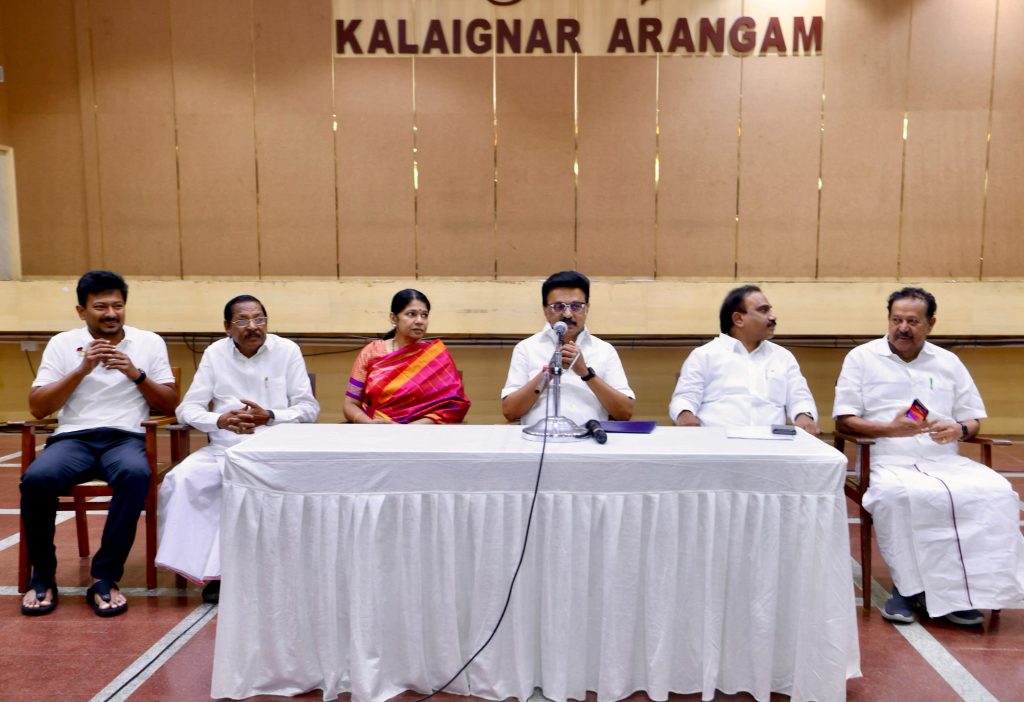
Addressing members of the 36-member committee on Saturday, Stalin made it clear that the exercise was not a routine formality but a crucial diagnostic effort to understand the root causes of the party’s electoral setback. The panel has been tasked with conducting extensive field studies across all 234 Assembly constituencies in Tamil Nadu, gathering insights directly from grassroots cadre and local functionaries.
Stalin emphasized that the review must be free from internal politics, favoritism, or blame games. In a striking directive, he told the panel members that their responsibility was neither to shield individuals nor to single out scapegoats.
“Your duty is neither to protect anyone nor to target anyone,” he said, underlining the importance of neutrality.
Going a step further, Stalin encouraged complete transparency—even if the criticism was directed at his own leadership. He urged party workers to speak openly about their grievances, dissatisfaction, and observations during the election process.
“Even if criticism is directed against me as party leader, include it,” he stated, reinforcing his call for honesty over hierarchy.
To ensure uniformity and discipline in the process, Stalin instructed that the review exercise be conducted strictly in two-member teams. Individual consultations were discouraged to maintain consistency and avoid discrepancies in data collection.
The panel members have been described as the “eyes and ears” of the party headquarters—tasked with capturing the authentic pulse of the cadre. Their mission includes identifying: Organizational weaknesses, Campaign-level failures, Voter sentiment shifts
Local leadership issues and
Booth-level performance gaps.
This structured and decentralized approach is expected to provide a granular understanding of the party’s performance across regions.
In a metaphor that stood out during the meeting, Stalin likened the review process to a medical diagnosis. He stressed that just as doctors require complete and honest information to treat a patient effectively, the party leadership needs an unfiltered account of ground realities to prescribe corrective measures.
“Doctors say the truth should never be hidden from them. I am now in that position,” he remarked..
He further described the final report as a “scan report” for the DMK—one that must clearly identify the “disease” before any “medicine” can be administered.
Stalin also placed strong emphasis on maintaining confidentiality throughout the review process. He instructed that findings and feedback collected from the field should not be shared with those being evaluated, to preserve the integrity of the exercise.
The committee has been given a strict deadline to submit its final report by June 5. Following this, the party leadership is expected to roll out corrective organizational measures swiftly, signaling a time-bound strategy for revival.
This introspective exercise comes at a critical juncture for the DMK, as it seeks to regain political momentum and rebuild trust among both cadre and voters. Stalin’s insistence on transparency, accountability, and structural reform indicates a leadership style that prioritizes long-term stability over short-term optics.
Whether this internal audit leads to meaningful transformation will depend on how rigorously the findings are implemented. But for now, the message from the top is unambiguous: the DMK is ready to confront uncomfortable truths in its pursuit of political resurgence.