


Tehran, June 17:
Iran’s demand that Israel withdraw from southern Lebanon has emerged as a major obstacle to a tentative agreement aimed at ending the war between Iran and the United States.
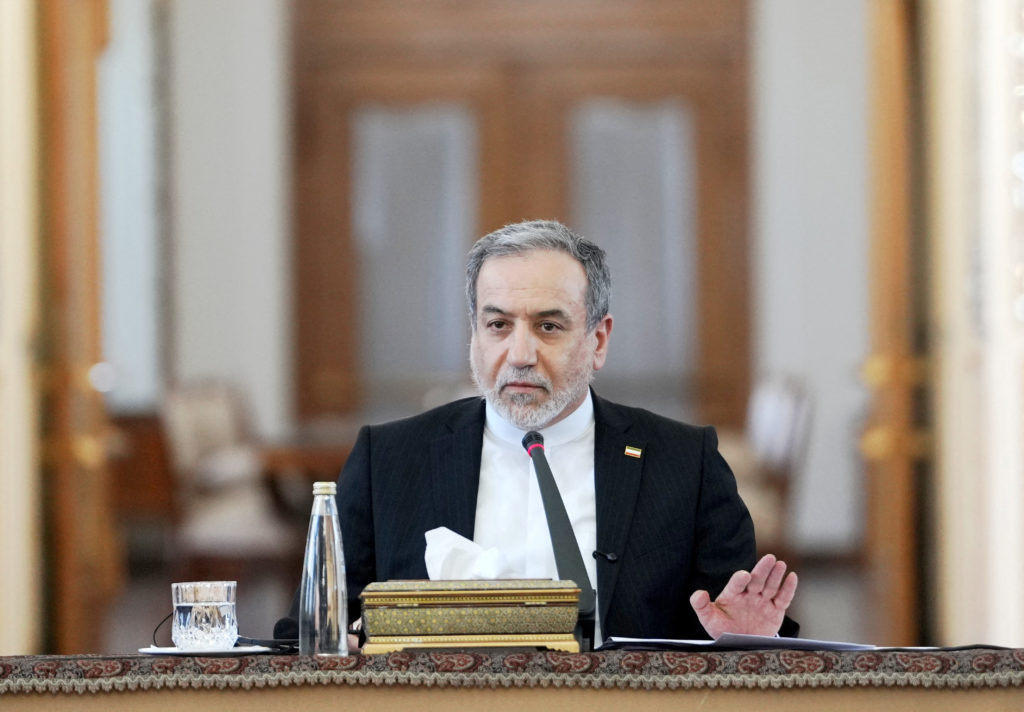
Iranian Foreign Minister Abbas Araghchi said that the conflict cannot be considered over while Israeli forces remain in territories they occupied during the war. However, Israel has rejected any such condition, with Prime Minister Benjamin Netanyahu insisting that Israeli troops will stay in Lebanon “as long as necessary.”
The proposed agreement, which has not been made public, has generated differing interpretations among the parties involved.
While Pakistan, a key mediator, maintains that the deal includes an end to military operations in Lebanon, US officials have stated that it contains no requirement for an Israeli withdrawal.
The disagreement threatens to undermine efforts to transform a fragile ceasefire into a lasting peace.
Israel entered the conflict after joining US strikes against Iran on February 28 and has since expanded military operations against the Iran-backed Hezbollah movement in Lebanon.
Although Hezbollah has suffered significant setbacks, it retains the ability to launch attacks on Israel.
Israeli operations in Lebanon have reportedly killed nearly 4,000 people, displaced more than one million, and strained relations between Israel and US President Donald Trump, who recently criticized Israel’s handling of the conflict, saying its strategy “just goes on forever.”
Regional officials familiar with the negotiations told the Associated Press that Iran insisted in the final stages of talks that the agreement include Lebanon.
According to these officials, the accord would require Israel to withdraw from most occupied Lebanese territory, retaining only a few strategic hilltop positions along the border.
The Lebanon issue is only one of several unresolved questions surrounding the proposed agreement, which is expected to be ceremonially signed in Geneva on Friday.
The deal is designed to halt a month-long conflict that has killed thousands across the Middle East, disrupted global trade, and driven up energy and food prices.
Under the framework outlined by US and Pakistani officials, the agreement would provide for the immediate reopening of the Strait of Hormuz and the lifting of blockades affecting Iran.
It would also launch a 60-day negotiation process on Iran’s nuclear programme and possible sanctions relief.
Additional provisions reportedly include access to frozen Iranian assets and the creation of a potential $300 billion reconstruction fund, though Trump later denied that the United States would directly invest in Iran.
Iran’s stockpile of highly enriched uranium remains a key issue. Tehran has agreed to discuss options for diluting or removing the material, but hard-line factions within Iran remain opposed.
Questions also persist regarding verification mechanisms and the handling of uranium stored at sites damaged by previous US strikes.
Despite these uncertainties, leaders of France, Germany, Italy and the United Kingdom welcomed the agreement as a “diplomatic breakthrough” and urged its rapid implementation, while France pledged support for efforts to reopen the Strait of Hormuz peacefully.