


Karur, July 11:
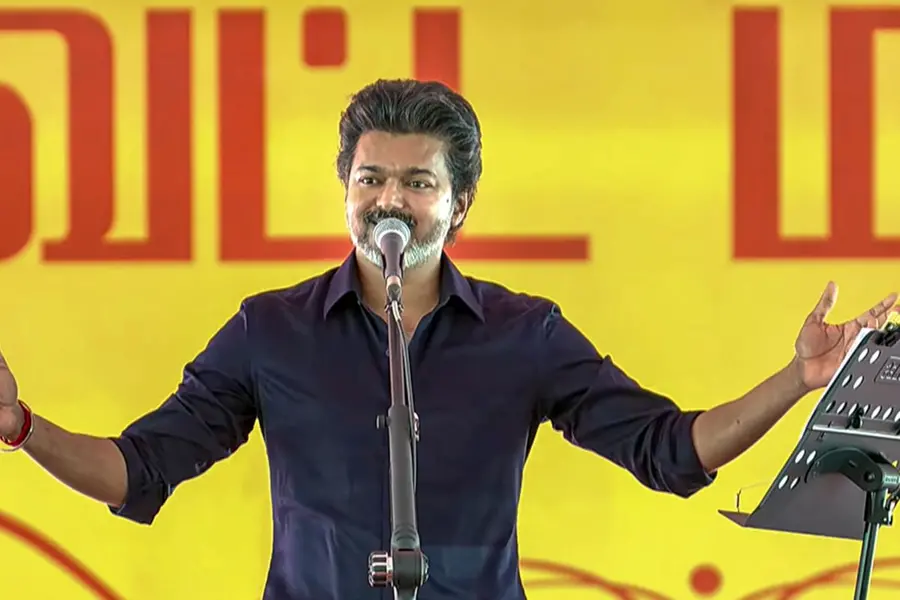
Chief Minister C Joseph Vijay delivered a politically charged and emotionally resonant speech in Karur, signalling what observers see as the beginning of an early electoral push in Tamil Nadu.
Returning to the district months after the tragic 2025 stampede that claimed over 40 lives, Vijay used the platform not only to offer solace but also to reshape the political narrative around the incident. Addressing a large gathering, he described the tragedy as the “most painful time” of his life and expressed deep anguish over the loss of lives, particularly children.
The Chief Minister distributed government job orders to families of victims as part of rehabilitation efforts, a move that combined administrative response with visible political outreach.
While the speech began on an emotional note, it quickly transitioned into a more assertive political tone. Vijay alleged that the stampede may not have been accidental, hinting at a possible “conspiracy” and raising questions over the role of authorities at the time.
By doing so, he attempted to shift the narrative from accountability to suspicion, positioning himself as both a victim of circumstances and a leader seeking justice.
The Karur address bore unmistakable signs of campaign-style messaging. Vijay emphasised his direct connection with the people, projecting himself as a leader who stands by affected families in times of crisis. Political observers note that such messaging is significant, especially with bypolls expected in key constituencies including Karur, though currently entangled in legal proceedings.
His speech also included indirect criticism of opposition parties, particularly the DMK, intensifying the political confrontation in the state. In response, DMK leaders countered his claims, asserting that the public is aware of who truly supported the victims.
The distribution of jobs and the promise of a memorial for the victims were key highlights of the event. While these measures were welcomed by many, critics argue that the timing and presentation carry political significance, especially given the heightened political climate.
Vijay’s approach reflects a blend of welfare governance and political communication—using emotional connect, symbolic gestures, and strong rhetoric to consolidate support.
The Karur speech marks a crucial moment in Vijay’s political journey. More than a routine government event, it served as a strategic platform to rebuild public perception, counter criticism, and energise his support base.
As Tamil Nadu heads into a politically significant phase, Karur may well be remembered as the point where governance messaging gave way to full-fledged campaign mode.