


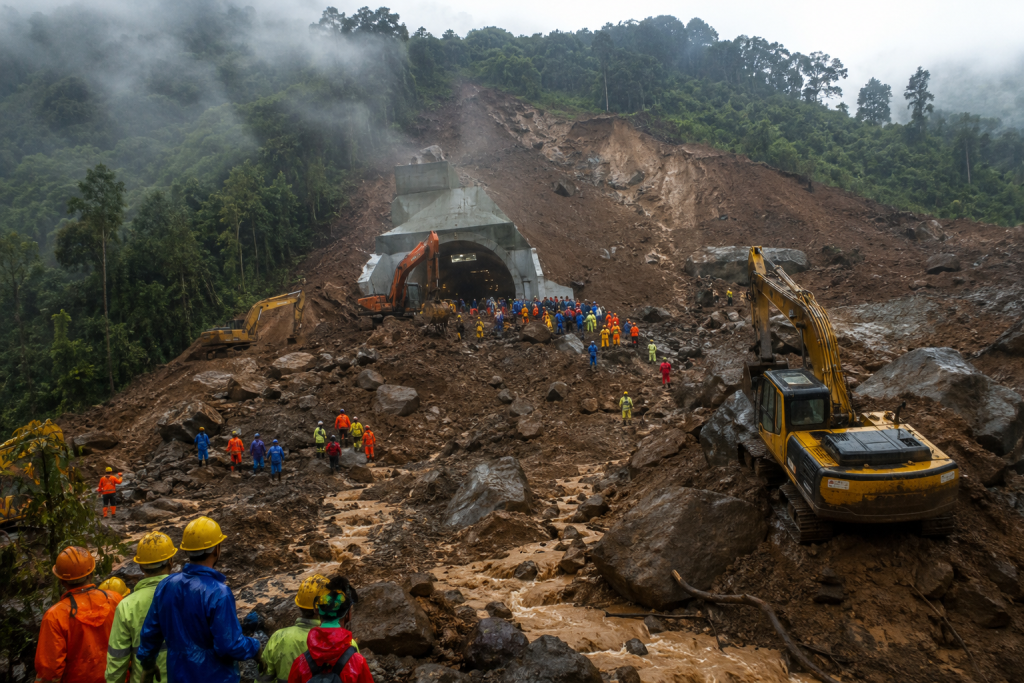
The recent landslide at a tunnel construction site in Wayanad, Kerala, has sparked serious concern not just as a natural disaster, but as a preventable human-induced crisis. Kerala Minister T Siddique clearly stated that the incident was not triggered by nature alone, but was the result of “unscientific dumping” of excavated earth. This shifts the narrative from an unavoidable tragedy to one rooted in negligence, raising urgent questions about construction practices in ecologically fragile zones like Wayanad.
According to officials, heavy rainfall—about 256 mm in 24 hours—did contribute to destabilizing the terrain. However, experts and authorities had reportedly already flagged concerns about how excavated soil was being piled up in the area. Despite prior warnings and directions to regulate or halt such practices, the accumulation continued, eventually leading to the collapse. This highlights a recurring issue in infrastructure development across India: environmental warnings are often acknowledged but not acted upon with the urgency they demand.
The human cost, fortunately, has not escalated into fatalities so far, with six injured individuals reported to be in stable condition. Yet, the deployment of multiple teams from the National Disaster Response Force and Fire and Rescue Services underlines the seriousness of the situation. Rescue operations remain ongoing, with authorities still trying to determine if more individuals are trapped beneath the debris. The presence of senior officials, including the district collector and disaster management authorities, reflects a coordinated response—but also underscores how reactive systems often take precedence over preventive governance.
What makes this incident particularly troubling is its similarity to past disasters in the region. Wayanad has witnessed devastating landslides before, including the catastrophic events of 2024. Despite such experiences, lessons appear inadequately implemented. The mention of similar dumping practices at township projects meant for landslide survivors further exposes systemic contradictions—where rehabilitation efforts themselves may be compromising safety.
This incident should serve as a wake-up call for policymakers, contractors, and regulatory bodies. Development cannot come at the cost of environmental stability, especially in sensitive hill regions. Scientific waste management, strict adherence to environmental impact assessments, and real-time monitoring of high-risk projects are no longer optional—they are essential. Without accountability and enforcement, such “man-made disasters” will continue to recur.
Ultimately, the Wayanad landslide is not just about one site or one mistake; it reflects a broader challenge in balancing development with sustainability. If corrective measures are not taken now, the cost in terms of human lives, environmental degradation, and public trust could be far greater in the future.