


Chennai, July 21:
In a significant development highlighting caste barriers within religious spaces, a Dalit Catholic man was finally laid to rest in a common cemetery in Tiruchy district after a struggle spanning more than two decades.
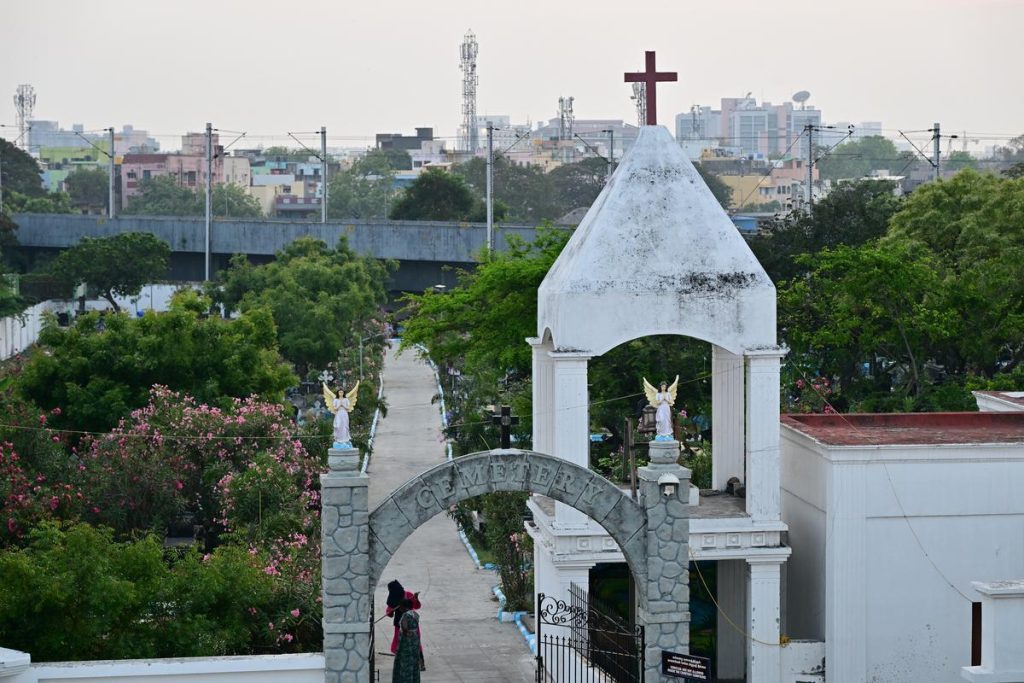
The deceased, A. Raju, a retired teacher from Kottapalayam village, was buried in the early hours of Monday after his body was kept waiting for nearly three days. The cemetery, located barely 300 metres from his residence, had long been treated as an exclusive preserve by members of a dominant caste, with no Dalit Christian previously allowed burial there.
Despite the cemetery being designated for all Catholics, the Church hierarchy had failed to enforce equal access, prompting Dalit residents to seek legal intervention. A civil suit filed in 2014 culminated in a District Munsif Court decree in August 2024, affirming that Dalit Catholics have equal rights to be buried in the common cemetery and that no obstruction should be permitted.
Ironically, the Bishop of the Kumbakonam Diocese and the local parish priest were among the defendants in the case. Activists alleged that successive parish priests had not taken meaningful steps to implement the court’s directive despite repeated appeals.
Tensions escalated after Raju’s death, with Dalit residents staging protests and engaging with district officials. Talks with church authorities over the weekend failed to yield a resolution, prompting intervention by revenue officials and the police.
A breakthrough came late Sunday night following negotiations led by the Musiri Revenue Divisional Officer. Authorities agreed to allow the burial in the common cemetery, though initially framing it as a one-time exception. Dalit representatives accepted the arrangement as a partial victory in view of the immediate need to conduct the funeral.
The burial took place after midnight, with the funeral procession moving amid heightened police presence. The last rites were performed in the presence of the parish priest and the deceased’s son, a priest who had arrived from Italy.
For the Dalit Christian community in the village, the moment marked not just the end of a prolonged struggle for one individual, but a symbolic step toward equality and dignity in death, long denied despite legal backing.