


Chennai, Aug 6:
The rejuvenation of the Cooum and Adyar rivers has emerged as a key focus area in the Municipal Administration and Water Supply (MAWS) Department’s allocation of Rs 29,863 crore in the Tamilaga Vettri Kazhagam (TVK) government’s maiden Budget presented on Wednesday. The outlay marks an increase from last year’s Rs 26,678 crore, signalling a renewed thrust on urban infrastructure and water management.
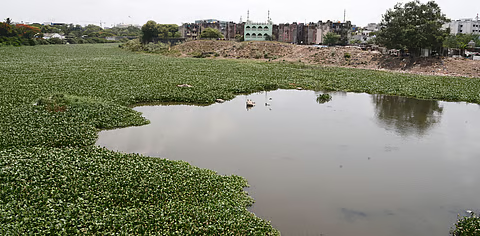
Highlighting the government’s commitment to restoring Chennai’s waterways, Finance Minister N Marie Wilson said global tenders will be floated to prepare Detailed Feasibility Reports (DFR) and Detailed Project Reports (DPR). Drawing inspiration from successful international models such as Seoul’s Cheonggyecheon River and Singapore’s Kallang River, the initiative aims to transform the polluted rivers into clean, vibrant public spaces with boating facilities, play areas, and riverside walkways.
Criticising previous regimes for spending substantial amounts without visible outcomes, the Minister said the present government would ensure effective implementation and long-term sustainability of the projects. The restoration of Cooum and Adyar is expected to significantly improve the city’s ecology while enhancing public spaces for residents.
In addition to river restoration, the Budget places emphasis on ensuring 24×7 drinking water supply through interlinking major sources. A sum of Rs 3,108 crore has been allocated for the Ring Main Pipeline system, which is scheduled for completion by 2030–31 and is aimed at ensuring equitable water distribution across Chennai.
Urban development initiatives will be undertaken under the Chief Minister’s Integrated Urban Development Mission with an allocation of Rs 2,117 crore. The scheme will address key areas including sewerage systems, solid waste management, green spaces, and technology-driven governance, with the objective of making Tamil Nadu a model for urban development by 2031.
The Greater Chennai Corporation will also see upgrades in mobility and civic infrastructure, including smart parking solutions, improved industrial roads, and enhanced flood mitigation measures through blue-green infrastructure and strengthened stormwater channels. The initiatives are expected to improve overall urban living standards while addressing long-standing civic challenges.