


Hong Kong, Sept 12:
A Hong Kong court has sentenced three prominent activists who organised annual vigils commemorating the 1989 Tiananmen Square crackdown to prison terms ranging from more than five years to over seven years.
Lee Cheuk-yan and Chow Hang-tung, who pleaded not guilty, were each sentenced to seven years and seven years and three months respectively. Albert Ho, who pleaded guilty, was sentenced to five years and two months.
The three were convicted earlier this year of inciting subversion under a national security law imposed by Beijing. They were charged in September 2021 and have remained in custody for years.
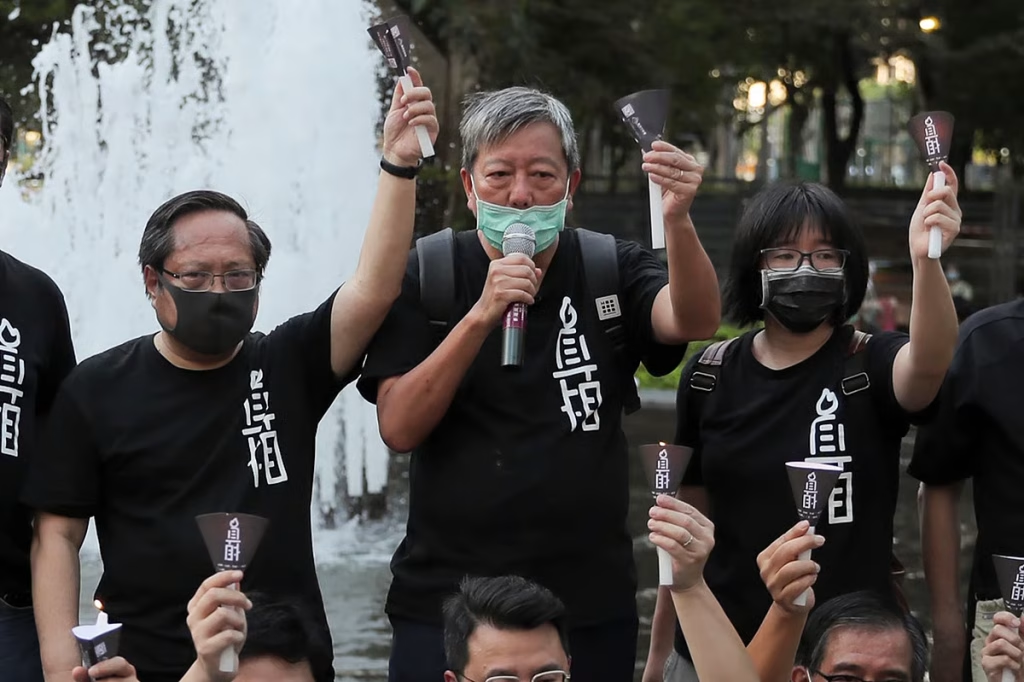
The activists were leaders of the Hong Kong Alliance in Support of Patriotic Democratic Movements of China, which organised the city’s annual Tiananmen vigil for three decades.
The vigil had been held at Victoria Park and was for years the only large-scale public commemoration of the 1989 crackdown in China. Tens of thousands of people attended the event each year.
Authorities banned the vigil in 2020, citing the coronavirus pandemic. The event was never allowed to return, becoming one of the symbols of the shrinking space for public dissent in Hong Kong.
The three activists were accused of supporting a campaign to end China’s one-party rule. Government-approved judges said the alliance’s call to “end one-party dictatorship” amounted to advocating the overthrow or undermining of the Communist Party’s leadership.
The defence rejected that interpretation, arguing that the alliance had never called for the use of illegal means. Chow, who represented herself in court, maintained that the demand for democracy meant allowing people to decide who should govern them.
The convictions and sentences have drawn criticism from supporters and rights advocates, who view the case as another indication of the tightening political environment in Hong Kong.
Hong Kong had previously been known for its vibrant civil society, relatively open media and large-scale public demonstrations. Since the 2019 protest movement, authorities have introduced sweeping changes to elections and prosecuted prominent activists and media figures.
Many civil society groups have also dissolved, including the alliance that organised the Tiananmen vigils.
Beijing has defended the national security law, saying it is necessary to protect stability and that activities threatening national security cannot be protected in the name of freedom of speech or the press.
The latest sentences come after other high-profile prosecutions under the security law. Former media tycoon Jimmy Lai was sentenced to 20 years in prison earlier this year.
The annual Tiananmen vigil had carried particular significance in Hong Kong because the 1989 crackdown remains a highly sensitive subject in mainland China. Hundreds and possibly thousands of people were killed when Chinese troops moved into central Beijing to crush the student-led pro-democracy protests.