


Chennai, Oct 12:
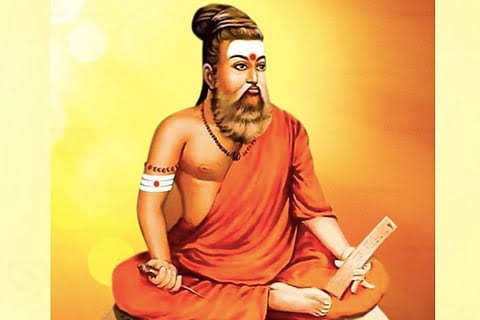
The Tamil Nadu politics debate over the depiction of Tamil poet and philosopher Thiruvalluvar in saffron attire has taken another turn, with the Tamilaga Vettri Kazhagam (TVK) asserting that the Bharatiya Janata Party (BJP) cannot claim ownership of the revered literary figure by associating him with a particular religious colour.
The controversy centres on attempts to portray Thiruvalluvar, whose Thirukkural is regarded as a universal work on ethics, governance and human relationships, within a specific religious identity. The TVK’s position is that the poet’s philosophy transcends religious, caste and political boundaries and should not be appropriated by any organisation.
Thiruvalluvar occupies a special place in Tamil society, with his couplets addressing a wide range of subjects, including virtue, family life, administration, justice, friendship and social conduct. His teachings have been interpreted and respected across different communities, making his identity a recurring subject of political debate in Tamil Nadu.
The controversy has particular political significance because the BJP has sought to expand its influence in the State by highlighting Tamil cultural icons and traditions. However, parties opposed to the BJP’s ideological approach have repeatedly argued that Tamil literary figures should be presented in a manner that reflects their universal appeal rather than being associated with a particular religious identity.
The TVK’s stand adds another dimension to the debate, as the party seeks to establish its political identity while addressing questions relating to Tamil language, culture and regional pride. The issue also highlights the continuing sensitivity surrounding the representation of Thiruvalluvar in public institutions and political events.
At the heart of the dispute is a broader question of cultural ownership: whether a historical figure whose work is widely regarded as universal can be represented through a single ideological lens. The TVK’s position is that Thiruvalluvar’s enduring relevance lies in his teachings and not in the colour of his attire.
The debate is likely to remain politically significant as parties continue to invoke Tamil icons in discussions on cultural identity, secularism and the relationship between Tamil nationalism and religious politics.