


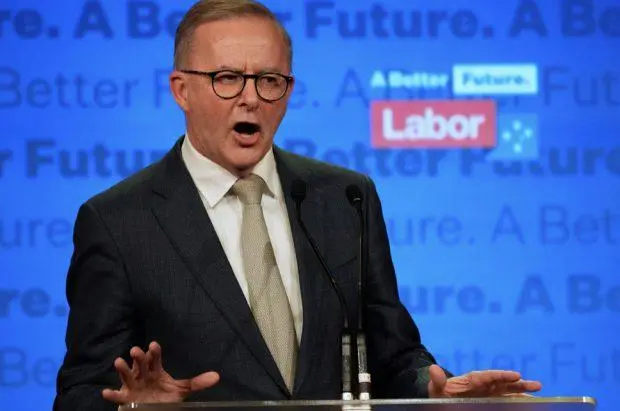
 Sydney : Astralians awoke to a new Prime Minister in Anthony Albanese, the centre-left Labour Party leader whose ascension to the nation’s top job from being raised in social housing by a single mother on a disability pension was said to reflect the changed fabric of the country today. The 59-year-old career politician, who has described himself as the only candidate with a non-Anglo Celtic name to run for prime minister in the 121 years the office has existed, referred to his humble upbringing in the inner-Sydney suburb of Camperdown while thanking electors for making him the country’s 31st leader.
It says a lot about our great country that a son of a single mom who was a disability pensioner, who grew up in public housing down the road in Camperdown, can stand before you tonight as Australia’s prime minister, Albanese told jubilant supporters after tipping Scott Morrison out of office to end nine years of conservative rule. Every parent wants more for the next generation than they had. My mother dreamt of a better life for me. And I hope that my journey in life inspires Australians to reach for the stars, he said. But it remained unclear whether Albanese’s party could form a majority government or have to rely on the support of an increased number of independents and minor party lawmakers who won seats in Saturday’s election, in results analysts described as extremely complicated, and which also mirrored the face of modern Australia.
With counting set to continue for many days as postal votes are tallied, one prospect that emerged was that Albanese may need to be sworn in as acting prime minister to attend Tuesday’s Quad summit in Tokyo with US President Joe Biden, Japanese Prime Minister Fumio Kishida and Indian Prime Minister Narendra Modi. The election delivered a clear rebuke to Australia’s traditional two-party system, both to Labour and the heavily defeated conservative coalition led by the Liberal party’s outgoing Prime Minister Morrison. The major parties bled votes to fringe parties and independents, including in many seats considered Labour or coalition strongholds.
Needing 76 seats in the lower Parliamentary chamber, the House of Representatives, to govern in its own right, Labour on Sunday afternoon was being called the winner in 71, with 67% of votes counted, according to the Australian Broadcasting Corp. The Liberal-National coalition was ahead in just 52 — drastically down from its bare-majority 76 in the 2019 poll, in what analysts called a fierce rejection of Morrison and his team’s handling of many issues in its three-year term including climate, COVID-19, women’s rights, political integrity and natural disasters such as bushfires and floods.
A total of 15 seats had been declared for independents or minor party candidates. Of these, three were from the environment-centric Green party and 12 were non-aligned politicians, with up to nine of those so-called teal independents. In a new wave in Australian politics, the teal independents are marketed as a greener shade than the Liberal Party’s traditional blue colour and want stronger government action on reducing Australia’s greenhouse gas emissions than either the government or Labour are proposing.