


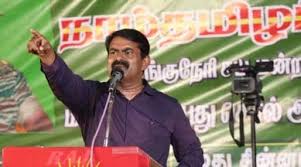
 Naam Tamilar Katchi (NTK) Coordinator Seeman has raised a pertinent question regarding the Dravida Munnetra Kazhagam’s (DMK) approach towards power-sharing within its alliance. Drawing a parallel with Andhra Pradesh, where Chandrababu Naidu shared power with Pawan Kalyan in their coalition government, Seeman questioned whether the DMK would offer similar power-sharing to its alliance partners in Tamil Nadu.
Speaking in Madurai, Seeman highlighted the recent controversy involving the owner of Coimbatore’s Annapoorna restaurant, who was allegedly pressured into issuing an apology. “If a business tycoon is subjected to such intimidation, imagine the plight of ordinary citizens,” he remarked. Seeman noted that BJP Tamil Nadu President K. Annamalai had acknowledged the apology and deemed the release of the video wrong.
Seeman went on to praise Viduthalai Chiruthaigal Katchi (VCK) leader Thol. Thirumavalavan for his courage in demanding a share in governance. “Thirumavalavan could have made this same demand during the 2021 Assembly elections,” he pointed out, suggesting that in the upcoming elections, Thirumavalavan should align with parties supporting the prohibition of alcohol. Seeman added that Thirumavalavan is asking the DMK for a share in governance, much like how Pawan Kalyan was given a role in the Andhra Pradesh coalition.
Seeman further criticized the DMK, questioning whether deputy chief ministers would always come from the Karunanidhi family. “This is exactly what Thirumavalavan is challenging. He must remain steadfast in his stance in the future,” Seeman advised.
Reflecting on his own political journey, Seeman noted that it is a common occurrence for those in power to create challenges for emerging political parties. He referenced actor Vijay’s potential entry into politics, commenting, “When I started my party, I faced many difficulties. Vijay, too, will have to face several challenges in the days ahead.”
Seeman’s remarks come as Tamil Nadu’s political climate intensifies, with various parties positioning themselves for the upcoming elections and raising questions about the state’s power dynamics.