


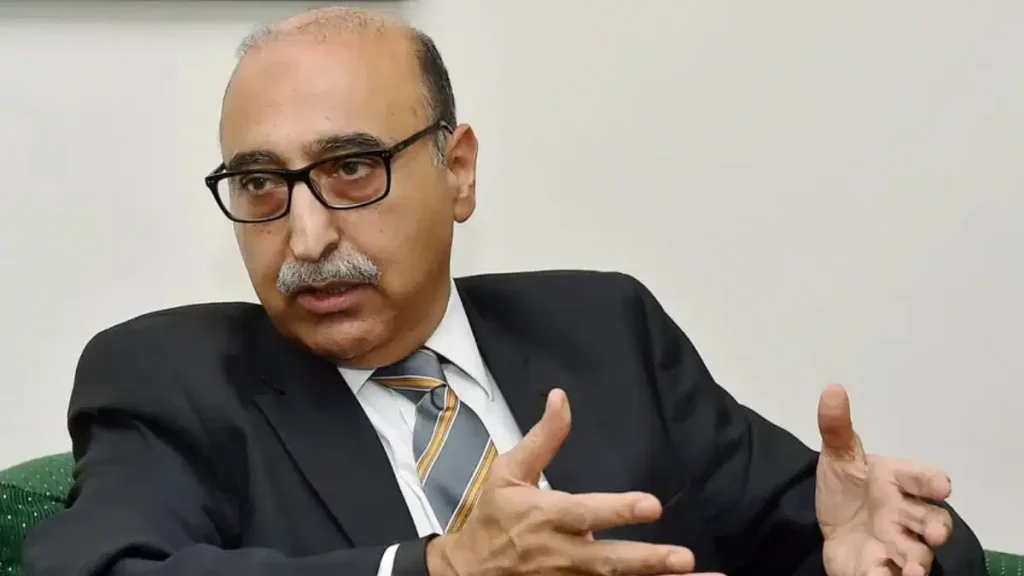
Islamabad, Mar 23: A controversial statement by Abdul Basit, Pakistan’s former High Commissioner to India, has triggered widespread attention after he suggested that Pakistan could strike Indian cities if it were attacked by the United States.
His remarks came during a discussion of a hypothetical conflict scenario, but quickly drew scrutiny due to their explicit nature.
Basit said that in the event of a US attack on Pakistan, his country would have no choice but to retaliate against India, specifically mentioning Mumbai and New Delhi.
He described this as a “worst-case scenario” and stressed that such a situation was highly unlikely, even calling it nearly impossible.
However, he reiterated the same position multiple times, suggesting that Pakistan would respond forcefully if it felt threatened.
He added that neither Pakistan nor India desires such an outcome, but maintained that any perceived aggression would compel Pakistan to act.
The remarks quickly gained traction online, sparking debate over their implications, particularly given Basit’s previous diplomatic role in India from 2014 to 2017—a period marked by sensitive and often strained bilateral relations.
The timing of the comments is notable, as regional tensions remain elevated. Pakistan’s relations with neighboring Afghanistan have also deteriorated in recent months.
Afghan authorities have accused Pakistani forces of carrying out airstrikes in areas including Kabul, Kandahar, and Paktika.
According to Taliban spokesperson Zabihullah Mujahid, some of these strikes allegedly hit civilian locations, including a rehabilitation centre.
Reports have indicated casualties and damage, though independent verification remains limited.
Against this backdrop, Basit’s comments have intensified discussions around regional stability and the potential consequences of provocative rhetoric.
Observers note that even speculative or hypothetical statements by former officials can influence public perception and diplomatic discourse, especially in a region with a history of geopolitical tension.
While there has been no official reaction from Indian authorities so far, the remarks have already fueled conversations across media and online platforms about security risks and responsible communication during sensitive times.