


Chennai, Oct 16:
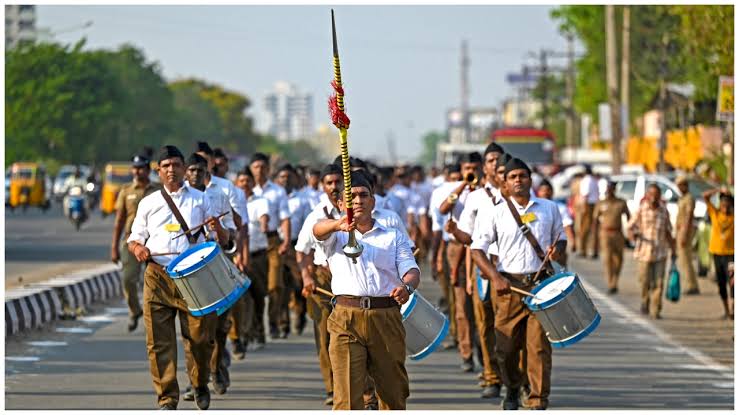
The Madras High Court on Friday allowed the Rashtriya Swayamsevak Sangh (RSS) to take out route marches in 128 locations across the state on October 25 and November one and directed the Tamil Nadu police to grant permission, while instructing them not to delay the process.
The orders were passed by Justice V.Lakshminarayan on a petition filed by RSS state secretary Jagadeesan seeking a direction to the police to grant permission to conduct marches at 128 locations across the state on October 18, 25 or November 1.
During the arguments, the State government said permission would be granted for the marches on October 25 and November 1. The RSS also assured the court that it would strictly comply with the guidelines laid down by the High Court.
The Judge observed that despite several orders of the High Court and Supreme Court, the State police had consistently relied on the same reasons to deny permission for the processions. “One thing must be said to the credit of the Tamil Nadu police. They have not come up with any novel reasons for rejection. They have consistently given the very reasons which this Court found as lame,” he remarked.
The Court also directed the police not to prolong the matter and to coordinate with RSS organisers to finalise the timings and locations of the marches and subsequent public meetings by Monday, October 19.
Tracing the litigation to 2022, the Court referred to several earlier decisions recognising the organisation’s right to conduct route marches, subject to lawful restrictions. It also referred to a 2023 ruling holding that public roads are secular spaces accessible to everyone irrespective of religion, caste or creed.
“It is a classic case of using a scalpel, not for the purpose of an operation, but to kill the patient on whom the operation is sought to be performed,” the Court observed.
During today’s hearing, Advocate General Vijay Narayan informed the Court that the State was agreeable to permitting the processions on October 25 and November 1, subject to modifications suggested by local police authorities depending on prevailing conditions. The RSS also furnished details of the proposed processions, including routes, organisers, participant numbers and venues for public meetings.
The Court directed that these details be annexed to its order to prevent subsequent disputes. It also recorded an undertaking by the RSS to comply with conditions imposed in earlier judicial proceedings. “The attitude of the police must not be that of Procrustes,” the judge observed.
The Court emphasised that police authorities should attempt to process applications for approval rather than search for defects to reject them. It further urged RSS organisers to submit applications sufficiently in advance and expressed hope that such disputes would not continue to occupy judicial time.
Recording the submissions, the judge directed the police to grant permission for the marches and the public meetings by October 19. He also instructed the RSS to strictly adhere to the court’s guidelines.