

Edappadi: From Loom Town to Leadership Forge

- Tamil
- Hindi
- Malayalam
- Kannada
- Telugu

Constituency No. 86 | Salem District | General
Edappadi is not merely a western Tamil Nadu constituency. It is the political crucible that produced a Chief Minister. A town of power looms and paddy fields that unexpectedly rose to the centre of state politics when Edappadi K. Palaniswami assumed office in 2017 and later emerged as Leader of the Opposition.
Situated in Salem district, Edappadi combines agrarian discipline, textile enterprise and Kongu political consolidation. It is neither metropolitan nor remote. It is industrious, structured and politically aware.
In recent years, Edappadi has become shorthand for a leadership style.
Temples and Sacred Anchors

At the heart of the town stands the ancient Sri Kasi Viswanathar Temple, a prominent Shaivite shrine that anchors devotional life. Surrounding villages house Mariamman temples and local deities that structure festival calendars and community gatherings.
Temple festivals draw large participation across social segments. Religious institutions serve not only spiritual but social functions, reinforcing local networks that often overlap with political mobilisation.
Faith and familiarity intertwine here.
Fields, Canals and Loops of Water

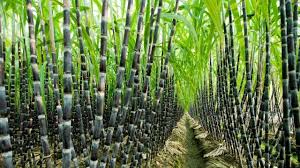
Edappadi lies within the broader Cauvery basin influence. Irrigation channels and tank systems sustain paddy, sugarcane and tapioca cultivation in surrounding villages. Borewell irrigation supplements canal flow.
Water management remains central to agricultural stability. Monsoon variation and upstream releases influence yield cycles.
The electorate here understands water arithmetic well.
Power Loom Pulse

Beyond agriculture, Edappadi is known for its textile and power loom units. The weaving industry, though smaller in scale than Tiruppur’s garment export cluster, remains a vital local employer.
Electricity tariffs, yarn prices and market demand affect livelihoods directly. MSME policy clarity influences sentiment among small industrial operators.
Edappadi blends loom rhythm with rural resilience.
The Electoral Ledger:
Few constituencies have been as closely identified with a political leader as Edappadi has in the past decade.
2011
Winner: Edappadi K. Palaniswami (AIADMK) — 1,04,065 votes
Second: P. Murugesan (DMK) — 86,132 votes
Third: R. Prakash (DMDK) — 23,418 votes
Margin: 17,933 votes
2016
Winner: Edappadi K. Palaniswami (AIADMK) — 98703 votes
Second: Annadurai N (PMK) 56681 votes
Third: Murugesan P A (DMK) — 55149 votes
Margin: 42022 votes
2021
Winner: Edappadi K. Palaniswami (AIADMK) — 1,63,154 votes
Second: Sampath Kumar (DMK) — 69,352 votes
Third: Shri Rathna (Naam Tamilar Katchi) — 6,626 votes
Margin: 93,802 votes
Even as the AIADMK lost state power in 2021, Palaniswami retained Edappadi convincingly, reinforcing his personal base.
The constituency has consistently delivered structured margins.
Leadership Imprint
When political instability followed the passing of Jayalalithaa, Palaniswami rose from within the party to become Chief Minister in 2017. His administrative tenure — focusing on infrastructure, irrigation projects and industrial investment — reshaped his political profile.
Even after transitioning to Leader of the Opposition, Edappadi remains symbolically tied to his trajectory.
This constituency is not just represented by him. It is associated with him.
Transport and Regional Access
Edappadi benefits from road links connecting Salem, Erode and Namakkal. Transport corridors support agricultural trade and textile movement.
Weekly markets bustle with paddy sacks, vegetable produce and textile bundles. Lorry traffic reflects commercial vitality.
Infrastructure maintenance remains a recurring civic demand.
Cuisine and Kongu Character
Kongu cuisine shapes daily life — arisi paruppu sadam, ragi preparations and coconut-infused gravies dominate household tables. Street-side eateries serve pepper-rich meat dishes reflecting western Tamil Nadu taste.
Food here is hearty and functional, aligned with labour-intensive livelihoods.
Civic Priorities
Key themes include:
Irrigation channel maintenance.
Power supply stability for looms.
Road resurfacing and rural transport.
Employment support for small textile units.
Urban infrastructure within Edappadi town has expanded in recent years, raising expectations further.
Governance here is evaluated through tangible improvement.
What Decides Here
Three determinants shape Edappadi’s electoral direction:
Leadership Credibility.
Personal association with state leadership carries weight.
Agrarian and Textile Stability.
Water and loom economics influence mood.
Organisational Discipline in the Kongu Belt.
Booth management remains decisive.
Edappadi does not drift easily. It consolidates around confidence.
Closing Frame
Temple bells ring across paddy fields. Power looms hum through narrow lanes. Market trucks rumble toward Salem. Political identity and local pride converge in conversation.
Edappadi stands as both constituency and crucible — a town that produced a Chief Minister and continues to shape opposition politics.
When it votes, it does so with the assurance of a constituency that knows its weight.
In western Tamil Nadu’s disciplined belt, Edappadi remains a leadership forge.