

Kalasapakkam: Dry Plains, Temple Trails and the Quiet Rural Verdict

- Tamil
- Hindi
- Malayalam
- Kannada
- Telugu

Constituency No. 65 | Tiruvannamalai District | General
Kalasapakkam lies in the northern sweep of Tiruvannamalai district, where semi-arid plains stretch toward rocky hillocks and scattered forest edges. It is a constituency that does not often dominate political headlines, yet reflects the steady rhythm of rural Tamil Nadu — agriculture, temple tradition and disciplined electoral participation.
This is interior Tamil Nadu in its most grounded form: agrarian, cautious and attentive to governance.
In Kalasapakkam, mandate grows slowly, like crops awaiting rain.
Dryland Agriculture and Tank Lifelines

Agriculture remains the backbone of Kalasapakkam. Much of the land depends on seasonal rainfall, supplemented by tanks and borewells. Paddy cultivation survives in irrigated pockets, while millets, groundnut and pulses dominate rain-fed tracts.
Tank desilting and minor irrigation restoration frequently surface in political discourse. Farmers closely track rainfall forecasts and water storage levels.
In constituencies like Kalasapakkam, irrigation confidence often determines political confidence.
Temple Landscape and Village Devotion
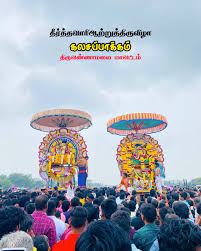
Religious life revolves around village temples dedicated to Mariamman, Murugan and Ayyanar. These shrines form the cultural heart of communities scattered across the constituency.
Temple festivals during Aadi and Panguni draw large gatherings. Fire-walking rituals, folk drumming and therukoothu performances animate village nights. Such events also become informal spaces where local leaders interact with voters.
Kalasapakkam’s cultural identity remains rooted in devotional continuity.
Proximity to Tiruvannamalai’s Sacred Centre
Though outside its boundary, the spiritual magnetism of Arunachaleswarar Temple influences the wider region. Pilgrim movement toward Tiruvannamalai during the monthly girivalam and the grand Karthigai Deepam festival passes through neighbouring areas, stimulating local trade.
Residents often travel to Tiruvannamalai town for education, healthcare and markets. This proximity ties Kalasapakkam’s rural economy to the district headquarters.
The constituency lives within the orbit of a sacred hill.
Road Links and Rural Mobility
Road connectivity between villages and Tiruvannamalai town plays a crucial role in daily life. Bus services carry students and workers to nearby towns. Road relaying and transport access frequently feature in campaign conversations.
For rural voters, mobility means opportunity.
When roads improve, economic confidence grows.
The Electoral Ledger:
Kalasapakkam has experienced competitive bipolar contests.
2011
Winner: V. Panneerselvam (AIADMK) — 1,04,944 votes
Second: K. Pitchandi (DMK) — 80,550 votes
Third: S. Manivannan (DMDK) — 26,413 votes
Margin: 24,394 votes
2016
Winner: V. Panneerselvam (AIADMK) — 84394 votes
Second: Kumar G (INC) — 57980 votes
Third: Kalidass R (PMK) — 23825 votes
Margin: 26414 votes
2021
Winner: P. S. T. Saravanan (DMK) — 94,134 votes
Second: V. Panneerselvam (AIADMK) — 84,912 votes
Third: E.Balaji (Naam Tamilar Katchi) — 8,822 votes
Margin: 9,222votes
Alliance consolidation shifted the balance.
Kalasapakkam’s electorate demonstrates responsiveness without volatility.
Civic Concerns
Key issues raised by residents include:
Drinking water supply during dry summers.
Tank restoration and irrigation improvement.
Rural road maintenance.
Government school and healthcare access.
Public representatives are expected to maintain strong presence across dispersed villages.
In rural constituencies, accessibility often outweighs rhetoric.
Cuisine and Rural Simplicity
Food culture reflects northern Tamil Nadu’s agrarian palate — rice meals, ragi dishes, tamarind gravies and locally grown vegetables. Weekly markets serve as both trading centres and social meeting points.
Meals are simple but sustaining, tied closely to agricultural cycles.
Political Temperament
Kalasapakkam’s electorate reflects the disciplined political culture of Tiruvannamalai district. Booth-level organisation and alliance structures influence margins significantly.
Campaign meetings tend to be modest affairs, often held in temple grounds or village squares.
The constituency does not chase spectacle. It observes, assesses and decides.
What Decides Here
Three determinants shape Kalasapakkam’s electoral direction:
Water Security.
Rainfall and irrigation determine agrarian mood.
Local Accessibility.
Voters value leaders who maintain village-level presence.
Alliance Structure.
Coalition clarity can widen or narrow margins.
Kalasapakkam votes with patience rather than impulse.
Closing Frame
Dry fields stretch toward rocky hills. Temple bells echo in quiet evenings. Buses carry students toward Tiruvannamalai town at dawn. Farmers gather beneath tamarind trees discussing rainfall prospects and campaign promises.
Kalasapakkam stands as a constituency of quiet observation — rooted in soil, faith and steady expectation.
When it votes, it does so like rain-fed land responding to the monsoon — measured, attentive and deliberate.
In Kalasapakkam, mandate grows slowly but surely.