

Kumbakonam: Mahamaham Waters, Temple Crowns and the Sacred Heart of the Cauvery Delta

- Tamil
- Hindi
- Malayalam
- Kannada
- Telugu

Constituency No. 171 | Thanjavur District | General
Kumbakonam occupies a unique place in Tamil Nadu’s civilisational map. Few towns combine religion, scholarship, commerce and political history with the same intensity. Located between branches of the Cauvery river system — the Cauvery and the Arasalar — the town has for centuries served as the spiritual nucleus of the fertile delta region.
Often described as the Temple City of Tamil Nadu, Kumbakonam contains an extraordinary concentration of shrines, tanks and sacred streets. Every lane carries echoes of devotional hymns, and every festival draws pilgrims from across the country. The town also stands at the centre of the famed Navagraha temple circuit, making it one of the busiest pilgrimage hubs in South India.
Yet Kumbakonam is not merely a religious town. It is a centre of learning, commerce and traditional craftsmanship, with bustling markets and educational institutions that keep the town vibrant through the year.
In Kumbakonam, the river, the temple and the marketplace form a single living civilisation.
Cauvery’s Sacred Geography

The prosperity of Kumbakonam is inseparable from the Cauvery river system. Branches of the river surround the town and nourish the delta’s fertile agricultural fields. For centuries these waters sustained paddy cultivation, temple endowments and trade routes across the Chola heartland.
Mythology gives the town an even deeper meaning. According to sacred lore, during a cosmic deluge a divine pot containing the seeds of creation drifted across the waters and came to rest here. Lord Shiva is believed to have broken the pot, spilling the nectar of life across the land. The place where the pot settled came to be known as Kumbakonam — the corner of the pot.
That legend still shapes the town’s spiritual identity.
Mahamaham Tank and the Pilgrim Tide

At the centre of the town lies the celebrated Mahamaham Tank, one of the most sacred ritual water bodies in the Hindu world. Once every twelve years, the Mahamaham festival attracts massive crowds of devotees who gather for the ritual bath believed to purify sins and renew spiritual life.
During the festival the entire town transforms into a vast pilgrimage centre. Priests conduct elaborate rituals, temple chariots roll through decorated streets and thousands of pilgrims converge around the tank’s steps.
Yet the Mahamaham festival also carries a painful memory. In February 1992, an enormous surge of devotees led to a tragic stampede near the tank during the celebrations. Many lives were lost in the chaos. The event remains one of the most solemn episodes in the town’s recent history and is remembered whenever Mahamaham returns.
Temple Crowns of the Town

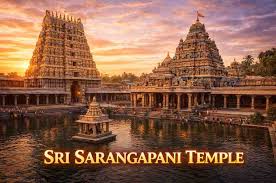
Kumbakonam’s skyline is dominated by towering gopurams that speak of centuries of devotion and temple patronage.
Among the most revered is the Adi Kumbeswarar Temple, the principal Shiva temple linked to the town’s founding legend. Its ancient sanctum and massive temple complex attract thousands of devotees every day.
Equally celebrated is the Sarangapani Temple, one of the most important Divya Desams dedicated to Lord Vishnu. The temple’s majestic chariot-shaped sanctum and towering rajagopuram make it one of the architectural highlights of the town.
Not far from Kumbakonam stands the famous Oppiliappan Temple, revered by Vaishnavite devotees as a temple where the Lord is worshipped without salt offerings, symbolising purity and simplicity in devotion.
The town also hosts other notable Shiva temples such as Nageswaran Temple, an early Chola architectural masterpiece known for its precise astronomical alignment, and the Someswarar Temple, another ancient shrine reflecting the rich temple-building tradition of the region.
Together these temples form a sacred network that gives Kumbakonam its identity as a spiritual capital.
Gateway to the Navagraha Circuit


Kumbakonam functions as the starting point for pilgrims undertaking the famous Navagraha pilgrimage across the Cauvery delta. Within a short distance from the town lie temples dedicated to the nine planetary deities — Suriyanar, Thingalur, Thirunageswaram, Alangudi, Kanjanur, Thirunallar, Keezhperumpallam and others.
Pilgrims usually stay in Kumbakonam and travel outward to complete the circuit, making the town a constant centre of religious tourism.
This steady flow of devotees sustains hotels, transport services and markets selling ritual items.
Religion here is also an economy.
Scholarship, Crafts and Coffee
Beyond temples and pilgrimage, Kumbakonam has long been known as a centre of traditional learning. Sanskrit schools, Vedic institutions and mutts nurtured generations of scholars who shaped religious and philosophical discourse in South India.
Craft traditions also flourished. Artisans of the region became renowned for creating panchaloha idols, brass lamps and temple vessels that are used in shrines across the country.
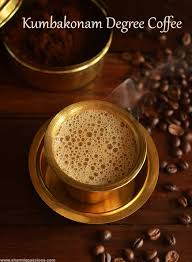
The town’s bustling streets are equally famous for Kumbakonam degree coffee, a strong and aromatic filter coffee prepared with thick milk. The beverage has become a cultural symbol of the town.
Here devotion, craftsmanship and daily life blend seamlessly.
Early Links to MGR’s Family
The Cauvery delta has also served as a crossroads for many communities over time. The family of future Chief Minister M. G. Ramachandran, originally from Kandy in Sri Lanka, passed through this region during their early years before his life took its later course in theatre, cinema and politics.
Such connections reflect the way towns like Kumbakonam have long served as centres of movement and opportunity.
Electoral Ledger: Kumbakonam’s electoral history reflects the broader political currents of the Cauvery delta.
2011
Winner: G. Anbalagan (DMK) — 78,690 votes
Second: N. R. Sivapathi (AIADMK) — 74,764 votes
Third: K. Ramesh (DMDK) — 24,321 votes
Margin: 3,926 votes
2016
Winner: G. Anbalagan (DMK) — 85048 votes
Second: Rathna S. (AIADMK) — 76591 votes
Third: Paramasivam D (DMDK) — 8098 votes
Margin: 8457 votes
2021
Winner: G. Anbalagan (DMK) — 96,057 votes
Second: Sritharvandayar G.M (AIADMK) — 74,674 votes
Third: Anandh . M(Naam Tamilar Katchi) — 12,480 votes
Margin: 21,383 votes
The constituency’s electoral verdicts often mirror the political mood across the delta districts.
Civic Concerns and Heritage Balance
Despite its spiritual prestige, Kumbakonam faces modern urban challenges. Managing pilgrim crowds, preserving ancient temple structures and improving civic infrastructure are ongoing priorities.
Residents frequently raise concerns about traffic congestion during festival seasons, drainage management and the preservation of heritage tanks and streets.
Balancing tradition with modern urban needs remains the central challenge for the town.
Closing Frame
Temple bells echo across narrow streets as pilgrims walk toward ancient shrines. The Cauvery flows quietly beyond the town, nourishing the fields that sustained the Chola heartland for centuries.
Kumbakonam stands not merely as a constituency but as a living archive of Tamil civilisation — where mythology, architecture, commerce and devotion merge into one continuous story.
When Kumbakonam votes, the verdict rises from the sacred waters of Mahamaham and the temple towers that guard the Cauvery delta.