


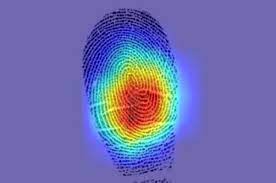
 Engineers from Columbia University in the US have built a new AI that shattered a long-held belief in forensics – that fingerprints from different fingers of the same person are unique.
It turns out they are similar, only we’ve been comparing fingerprints the wrong way!
It’s a well-accepted fact in the forensics community that fingerprints of different fingers of the same person are unique, and therefore, unmatchable.
A team led by Columbia Engineering undergraduate senior Gabe Guo challenged this widely held presumption.
Guo, who had no prior knowledge of forensics, found a public US government database of some 60,000 fingerprints and fed them in pairs into an artificial intelligence-based system known as a deep contrastive network.
Sometimes the pairs belonged to the same person (but different fingers), and sometimes they belonged to different people.
Over time, the AI system, which the team designed by modifying a state-of-the-art framework, got better at telling when seemingly unique fingerprints belonged to the same person and when they didn’t.
The accuracy for a single pair reached 77 per cent. When multiple pairs were presented, the accuracy shot significantly higher, potentially increasing current forensic efficiency by more than tenfold.
“The AI was not using ‘minutiae,’ which are the branchings and endpoints in fingerprint ridges – the patterns used in traditional fingerprint comparison,” said Guo, who began the study as a first-year student at Columbia Engineering in 2021. “Instead, it was using something else, related to the angles and curvatures of the swirls and loops in the centre of the fingerprint.”