


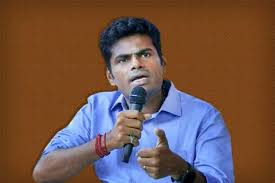
 Tamil Nadu BJP state president K. Annamalai has called on the ruling DMK government to immediately open the yarn procurement tender for the distribution of free dhotis and sarees under the Public Distribution System (PDS). In a strongly worded statement, Annamalai urged Chief Minister M.K. Stalin to address the livelihood concerns of powerloom weavers in Erode and other districts, who rely heavily on these government contracts.
Annamalai criticized the DMK government for alleged corruption and inefficiencies in the execution of the free dhoti and saree scheme. He claimed that since the DMK came to power, there has been an increase in irregularities, including demands for commission charges from manufacturers, leading to delays in procurement.
“For the past three years, we have been witnessing that the procurement work, which was supposed to take place in June, has been delayed till October. As a result, the dhotis and sarees, which should have been distributed to the public for the Pongal festival through ration shops, have been delayed until February,” Annamalai stated.
The BJP leader also referenced a complaint lodged by his party against the state’s Minister for Handlooms and Textiles, R. Gandhi, with the Directorate of Vigilance and Anti-Corruption (DVAC). Annamalai alleged that the DMK government has been deliberately delaying the supply of yarn to weavers, only to later purchase finished sarees from private individuals at inflated prices to earn higher commissions.
Annamalai’s comments come at a time when powerloom weavers, particularly in Erode, are reportedly facing severe financial distress due to the delay in yarn procurement. The delay, he warned, is pushing many weavers towards unemployment, exacerbating the economic challenges they face.
The free dhoti and saree scheme is a critical welfare initiative in Tamil Nadu, providing essential garments to economically disadvantaged families during major festivals like Pongal. However, repeated delays in the procurement and distribution process have led to growing discontent among the beneficiaries and the weaving community.