


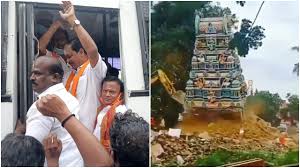
 Coimbatore witnessed heightened tensions as Indu Makkal Katchi (IMK) leader Arjun Sampath was taken into custody by the police while leading a protest against the arrest of his son, Omkar Balaji, who is also the youth wing president of IMK. The protest took place near the Koniamman temple, where Sampath and several supporters gathered to demand Balaji’s release.
Omkar Balaji’s arrest came after a controversial statement he made, which threatened RR Gopal, the editor of the Tamil magazine Nakkheeran. The statement, made during an October 27 protest against an article published by the magazine on Isha Yoga Centre, included a direct threat to “chop off the tongue” of the editor. This led to legal action by the Coimbatore city police, who booked Balaji for his remarks under charges that encompass threats and incitement.
The arrest of Balaji triggered widespread reactions from Indu Makkal Katchi, prompting the party to announce statewide protests on November 17. As part of these demonstrations, Arjun Sampath led a protest in Coimbatore, only to be met with swift police intervention. Reports from Daily Thanthi noted that Sampath, along with 20 other IMK activists, including a woman, were arrested while attempting to demonstrate at different locations in the city, including near the Sengalivai Sangam.
The Coimbatore police’s decision to arrest Sampath and other IMK members was aimed at maintaining public order and preventing any escalation of tension. The protests had the potential to incite unrest due to the sensitive nature of the issue, which involved freedom of expression, media integrity, and public safety. The police’s proactive measures underline the administration’s commitment to curbing inflammatory rhetoric and safeguarding the community.
The arrest of Arjun Sampath, a vocal figure known for his active participation in state politics and protests, is expected to stir discussions on the balance between free speech and responsible conduct. Supporters of IMK view the arrest as an infringement on their right to protest, while critics argue that threats and incendiary comments have no place in democratic discourse.