


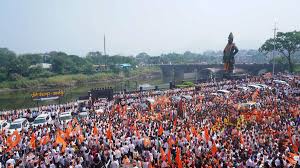
 The stage is set for the Maharashtra Assembly elections, with over 9.7 crore eligible voters heading to the polls on November 20, 2024, to decide the fate of 4,136 candidates contesting 288 seats across 36 districts. The election marks a critical showdown between the ruling BJP-led Mahayuti alliance and the Congress-led Maha Vikas Aghadi (MVA). The Mahayuti, comprising Chief Minister Eknath Shinde’s Shiv Sena, Ajit Pawar’s NCP faction, and the BJP, campaigned on a “double-engine sarkar” narrative, focusing on development and welfare schemes for a “brighter future.” On the other side, the MVA, uniting Congress, Sharad Pawar’s NCP(SP), and Uddhav Thackeray’s Shiv Sena (UBT), emphasized issues of inflation, unemployment, farmer distress, and threats to constitutional values. The campaign saw high-decibel rhetoric from leaders such as Prime Minister Narendra Modi, Union Ministers Amit Shah and Nitin Gadkari, and Congress leaders Rahul Gandhi and Mallikarjun Kharge, among others. While urban voters grappled with ideological appeals, rural voters voiced concerns over GST, inflation, and low MSP for key crops like soybeans, cotton, and onions. With intricate caste equations and shifting alliances adding complexity, the election is not only pivotal for Maharashtra’s governance but also a bellwether for national politics, making the stakes higher than ever.The stage is set for the Maharashtra Assembly elections, with over 9.7 crore eligible voters heading to the polls on November 20, 2024, to decide the fate of 4,136 candidates contesting 288 seats across 36 districts. The election marks a critical showdown between the ruling BJP-led Mahayuti alliance and the Congress-led Maha Vikas Aghadi (MVA). The Mahayuti, comprising Chief Minister Eknath Shinde’s Shiv Sena, Ajit Pawar’s NCP faction, and the BJP, campaigned on a “double-engine sarkar” narrative, focusing on development and welfare schemes for a “brighter future.” On the other side, the MVA, uniting Congress, Sharad Pawar’s NCP(SP), and Uddhav Thackeray’s Shiv Sena (UBT), emphasized issues of inflation, unemployment, farmer distress, and threats to constitutional values. The campaign saw high-decibel rhetoric from leaders such as Prime Minister Narendra Modi, Union Ministers Amit Shah and Nitin Gadkari, and Congress leaders Rahul Gandhi and Mallikarjun Kharge, among others. While urban voters grappled with ideological appeals, rural voters voiced concerns over GST, inflation, and low MSP for key crops like soybeans, cotton, and onions. With intricate caste equations and shifting alliances adding complexity, the election is not only pivotal for Maharashtra’s governance but also a bellwether for national politics, making the stakes higher than ever.