


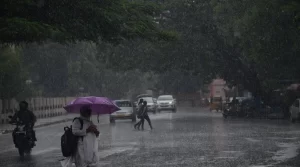
 A low-pressure area has formed in the southwest Bay of Bengal, likely to intensify into a depression within 36 hours, triggering widespread rainfall and thunderstorms in Tamil Nadu, Puducherry, and Karaikal until October 24.
This has led to red alerts in four districts, including Chengalpet, prompting Chief Minister M.K. Stalin to hold a high-level meeting with district collectors to coordinate preparedness and response efforts. With rough seas and strong winds forecasted, fishermen are advised to avoid venturing into the sea, and coastal safety measures are being reinforced.
Authorities have issued a precautionary advisory for fishermen not to venture into the sea for the next 36 hours as a low-pressure area forms in the southwest Bay of Bengal. The weather system is expected to intensify, bringing rough seas, strong winds, and the possibility of heavy rain along parts of Tamil Nadu’s coast.
Deep-sea fishing vessels have been advised to return to shore, and those already at sea have been instructed to seek the nearest safe harbor.
Coastal districts, including Nagapattinam, Cuddalore, and surrounding areas, may experience rough sea conditions with periods of heavy rainfall and thunderstorm activity.
Local fisheries departments and coast guard units are coordinating to ensure the safety of fishermen and to monitor sea conditions.
For October 22, the RMC has extended the orange alert to Tiruvallur, Chennai, Chengalpattu, Kancheepuram, Villupuram, Ranipet, and Tiruvannamalai districts, while predicting heavy rain in Krishnagiri, Dharmapuri, Villupuram, Tiruvannamalai, and Tirupattur districts. The forecast for October 23 warns of very heavy rainfall in Tiruvallur, Chennai, Chengalpattu, Kancheepuram, Ranipet, and Vellore, while Krishnagiri, Dharmapuri, Villupuram, Tiruvannamalai, and Tirupattur may experience heavy showers.
By October 24, districts including Tirupattur, Vellore, Krishnagiri, Chennai, Tiruvallur, Kancheepuram, Ranipet, Tiruvannamalai, Erode, Nilgiris, Coimbatore, Dharmapuri, and Krishnagiri are expected to witness intense rainfall.
Chennai and neighboring areas expect heavy rains over the next two days, leading to possible waterlogging and traffic disruptions. The Greater Chennai Corporation has ramped up flood preparedness, doubling relief centers to 215 and installing diesel generators to ensure uninterrupted power supply during critical times. The city has set up 106 cooking centers offering free meals, and temporary shelters are ready to accommodate displaced residents. Citizens are urged to stay alert and use the helpline 1913 for relief services.
Deputy Chief Minister Udhayanidhi Stalin recently inspected flood mitigation efforts in Chennai’s vulnerable areas, emphasizing swift drainage and infrastructure readiness. The Chief Minister has instructed officials to relocate people promptly from flood-prone zones, maintain 24-hour rescue teams, and ensure relief camps are fully equipped with food, water, medical support, and sanitation.
Authorities continue monitoring monsoon patterns, urging residents to follow official advisories to stay safe during this intensified northeast monsoon season.
Historically, Chennai has faced severe flooding, notably in 2015 when relentless monsoon rains led to unleveled water levels and widespread inundation. The floods inundated low-lying areas, exacerbated by years of unchecked urbanization, illegal developments, and reduced natural water bodies across the city’s catchment areas.
This disaster was described as the worst in a century, leading to massive evacuations, power outages, and disruption of essential services, including the closure of Chennai International Airport and suspension of rail services.
Chennai’s flood risk is amplified by the loss of its traditional water management systems, such as interconnected ponds and canals, which once absorbed excess rainwater like a sponge. Rapid industrialization, urban expansion, and encroachment on wetlands and floodplains have hindered natural drainage, increasing surface runoff and overwhelming existing flood control infrastructure. Climate change has compounded these challenges by causing more frequent and intense rainfall events.
Efforts to enhance Chennai’s resilience involve both structural and policy measures. Initiatives include restoring water bodies, strengthening river and canal conservation, and enforcing stricter land-use regulations to prevent further encroachment.