


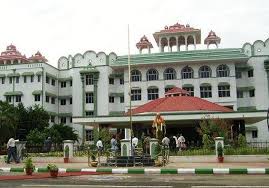
 The Madurai Bench of the Madras High Court fired rapid questions at the Tamil Nadu government today over the contentious Karthigai Deepam lighting on Thiruparankundram hilltop, where a single judge’s December 1 order allowing petitioners like Ram Ravikumar and nine others to light the lamp at the ancient Deepa Thoon pillar was defied, sparking chaos yesterday.
Justices G. Jayachandran and K.K. Ramakrishnan grilled Additional Advocate General Raveendran on deploying Central Industrial Security Force (CISF) beyond court premises, noting their role limits to High Court security, and challenged why prior rulings weren’t followed despite a 1923 decree affirming temple rights over most of the hill excluding specific dargah portions.
Government counsel argued the single judge’s directive by Justice G.R. Swaminathan violated law, risked communal harmony—proven by yesterday’s barricade-tearing and police attacks—and justified Section 144 curbs, questioning the rush for contempt despite a 30-day window. Petitioners countered that lighting the deepam revives Tamil cultural tradition halted in British times, with police denying protection forcing CISF reliance, while judges probed the order copy’s 13-hour post-issuance appeal, temple no-show, and deepam pillar’s antiquity versus the Subramaniya Swamy Temple.
BJP Tamil Nadu president Nainar Nagendran in Nellai slammed the DMK regime for one-sided actions to stoke riots for vote banks, fearing defeat, insisting no need for Section 144 (allowing up to three people) as locals including Muslims oppose no issue with the hilltop ritual akin to home temple lamps.
He accused police inaction against temples, HR&CE appeals, and plots by CM’s force and Deputy CM Udhayanidhi Stalin’s anti-Sanatana remarks, expecting favorable court verdict by 3 PM to light the Bharani Deepam despite Hindu Munnani clashes.
Judges stressed communal harmony means mutual allowance, not obstruction—”Why block harmless lighting?”—ordering documents on Section 144 timing and promising orders today, as volatility persists post-non-compliance that injured police and drew protests.