


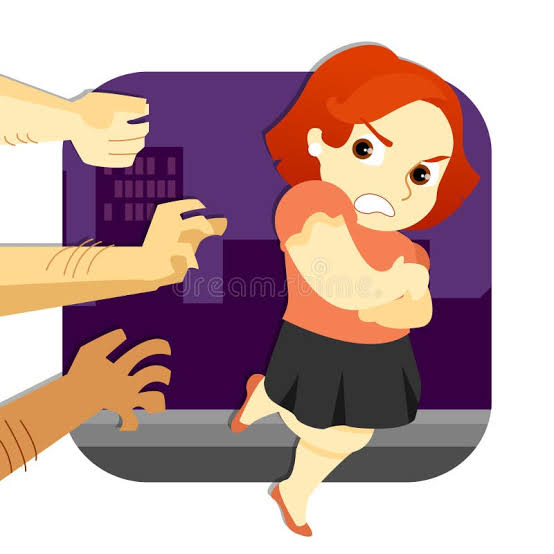

The recent incident where actress Nidhhi Agerwal was mobbed and manhandled by a chaotic crowd at The Raja Saab song launch in Hyderabad starkly highlights a deeper social issue — the way women, even celebrities, can be reduced to objects of reckless behaviour in public spaces. Footage from the event shows her visibly struggling to reach her car amid a dense throng, with many netizens condemning the lack of basic crowd control, respect for personal space, and safety measures at such gatherings.
This unsettling episode reflects a mindset that too often blurs admiration with entitlement — where large crowds forget that women, famous or not, have the right to move freely and safely.
As one social media commenter put it, “Celebrities are human beings, not public property,” underscoring how admiration should never turn into intimidation.
Attitudes like these can spill into everyday life too, contributing to broader issues of harassment and lack of accountability that many women face in public places.
To overcome this, there needs to be a shift in societal mindset and behaviour — teaching men and boys from a young age about consent, respect, and boundaries, and ensuring event organisers and authorities prioritise structured crowd management. Advocates like anti-harassment campaigners repeatedly stress that it’s not women’s presence in public that should be policed, but men’s conduct that must be disciplined. Real change comes when communities and institutions work together to protect women’s dignity, ensuring no one — celebrity or everyday citizen — has to endure distress just for stepping out in public.
Adding to this disturbing reality is the social media–fuelled obsession with selfies and viral moments, which has dangerously blurred boundaries in public spaces. For many, the urge to capture a photo with a celebrity — to post, tag and seek validation online — overrides basic human decency. What should be admiration quickly turns into aggressive crowding, grabbing and groping, justified in the name of “fan craze”. As one critic bluntly noted, “The phone camera has become an excuse for entitlement.” The pressure to prove proximity to fame has normalised invasive behaviour, especially towards women, who are often expected to smile, comply or stay silent.
This culture exposes a deeper problem in male mindset and collective behaviour, where accountability dissolves in crowds and harassment is dismissed as enthusiasm. Overcoming this demands more than policing events; it requires re-educating society. Schools, families and media must reinforce that consent does not disappear because someone is famous, and that admiration never grants access to a woman’s body. Event organisers must enforce zero-tolerance rules, restrict crowd access, and ensure visible security. As feminist voices often remind us, “Safety is not a privilege celebrities should negotiate for — it is a right every woman deserves.” Until respect becomes instinctive and not optional, such incidents will continue to shame society far more than they harm stardom