


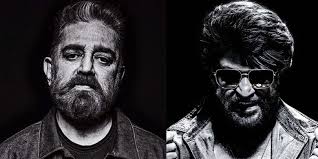
The idea of Kamal Haasan and Rajinikanth acting together again after four decades is more than just exciting casting news. It feels symbolic — almost cinematic destiny completing a circle.
These are not merely two stars. They are two parallel histories of Tamil cinema.
Kamal Haasan represents relentless reinvention. Across decades, he has treated cinema as craft — transforming himself physically and emotionally for roles, pushing genre boundaries, and often challenging the audience. Rajinikanth, on the other hand, mastered something rarer: myth. His screen presence became larger than narrative logic. He is not just watched; he is celebrated.
When such contrasting energies meet, the result is not simply a film — it becomes a cultural moment.
For years, fans have compared them, debated them, built rivalries around them. Yet the truth is that Tamil cinema was built by both. Their journeys may have diverged in style, but they elevated the industry together in their early years before becoming independent phenomena.
A collaboration now would carry layered meaning:
It would signal maturity — an era where legacy outweighs rivalry.
It would remind audiences that stardom can coexist without competition.
It would unite generations: those who saw them rise, and those who grew up watching them dominate separately.
The involvement of Nelson Dilipkumar adds another dimension. A director known for blending commercial energy with quirky storytelling would be tasked not just with directing actors, but with balancing two legacies. That responsibility alone makes the project fascinating.