


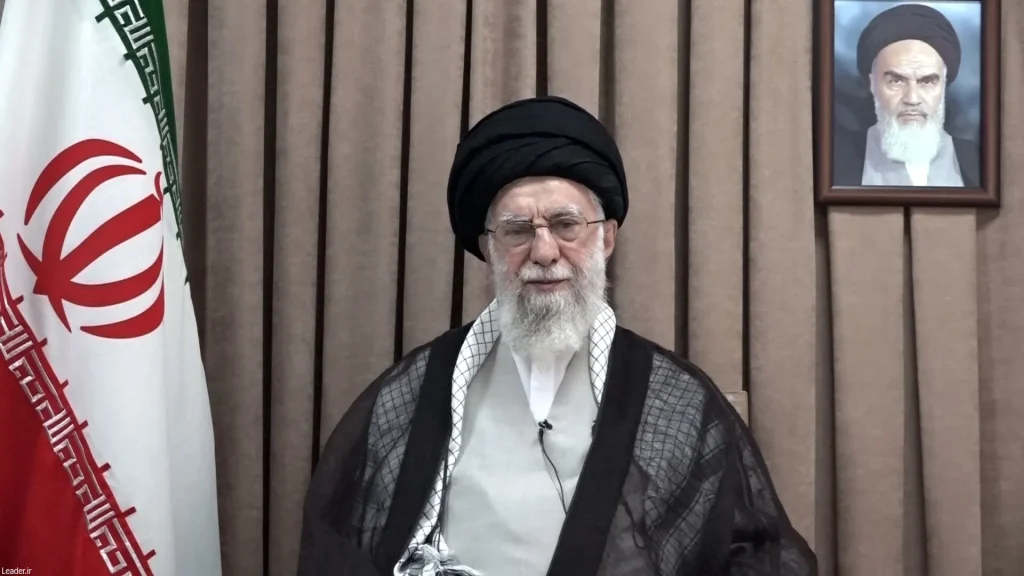
Tehran, Mar 18: Iran’s new supreme leader Mojtaba Khamenei has rejected ceasefire proposals conveyed through intermediary countries, taking a hardline stance against the United States and Israel, according to a senior Iranian official cited by Reuters.
During his first foreign policy discussions, Khamenei reportedly said it was not the “right time for peace” and insisted that both countries must first “accept defeat” and pay compensation.
The development comes amid escalating conflict, now in its third week, with around 2,000 people reported dead. Tensions have intensified following the killing of former supreme leader Ali Khamenei, after which Mojtaba Khamenei was named his successor.
Uncertainty surrounds the new leader’s condition. Donald Trump said it remains unclear whether Khamenei is alive, noting he has not been seen publicly after reports he was injured in an airstrike.
US Defence Secretary Pete Hegseth also indicated he may have been wounded, with conflicting claims suggesting severe injuries or even death.
Diplomatic efforts appear stalled, with sources indicating the Trump administration has rebuffed attempts by Middle Eastern allies to initiate talks.
Meanwhile, the strategic Strait of Hormuz remains largely closed, disrupting global energy supplies and raising concerns over rising oil prices and inflation.
Amid intense Israeli airstrikes on Beirut and southern Lebanon, the Lebanese government has proposed direct talks with Israel, the first since 1982, but officials insist that hostilities must end first.
Hezbollah’s missile attacks on Israel have triggered the bombardment, killing roughly 850 Lebanese and displacing over a million people.
Israel threatens a wider ground invasion, targeting infrastructure and territory, while the United States, preoccupied with the wider regional war, shows little interest in mediation.
President Joseph Aoun and Prime Minister Nawaf Salam, in office since early 2025, have pledged to disarm Hezbollah, which historically resisted state control. Ahead of the conflict, Lebanese forces dismantled hundreds of Hezbollah warehouses and positions but avoided direct confrontation.
Hezbollah remains defiant, portraying itself as Lebanon’s sole defender and aligning with Iran, rejecting government overtures as a betrayal.
Israeli troops are advancing in southern Lebanon, striking key roads and bridges, while the Lebanese government struggles to provide shelter and aid to displaced civilians amid a severe financial crisis.
International pressure is being sought to protect infrastructure, though confidence in Lebanon’s ability to rein in Hezbollah remains low.