


Chennai, May 23:
The fragile political equations emerging after Tamil Nadu’s fractured Assembly mandate have come under strain, with a public war of words breaking out between the DMK and its long-time ally, the VCK, exposing cracks within the broader Secular Progressive Alliance.
The controversy was triggered by remarks from DMK deputy general secretary A Raja, who posted a cryptic analogy on social media shortly after VCK leader Vanni Arasu and IUML’s AM Shahjahan were sworn in as ministers in the C Joseph Vijay-led TVK government. Without naming any party, Raja likened a bending coconut tree offering tender coconuts to a neighbour to the term “muttathengu” in literature, prompting widespread interpretation that the jibe was aimed at alliance partners supporting the new regime.
The VCK responded sharply, asserting its independent political identity and rejecting any suggestion of opportunism. In a pointed counter, the party questioned the DMK’s own political history, recalling its past alliances, including ties with the BJP-led government under Atal Bihari Vajpayee. The VCK accused the DMK of political inconsistency and “selfishness,” stating that Tamil Nadu had witnessed many such “political dramas” over the years.
Escalating the confrontation, VCK treasurer S S Balaji issued a stern warning to Raja, cautioning against provocative rhetoric. Adding to the criticism, TVK minister Aadhav Arjuna—a former VCK functionary—condemned the remarks directed at VCK president Thol Thirumavalavan and party cadre. He described the comments as violative of the principles of dignity and decorum espoused by Dravidian stalwarts like Periyar E V Ramasamy and C N Annadurai, accusing the DMK of straying from its foundational ideals.
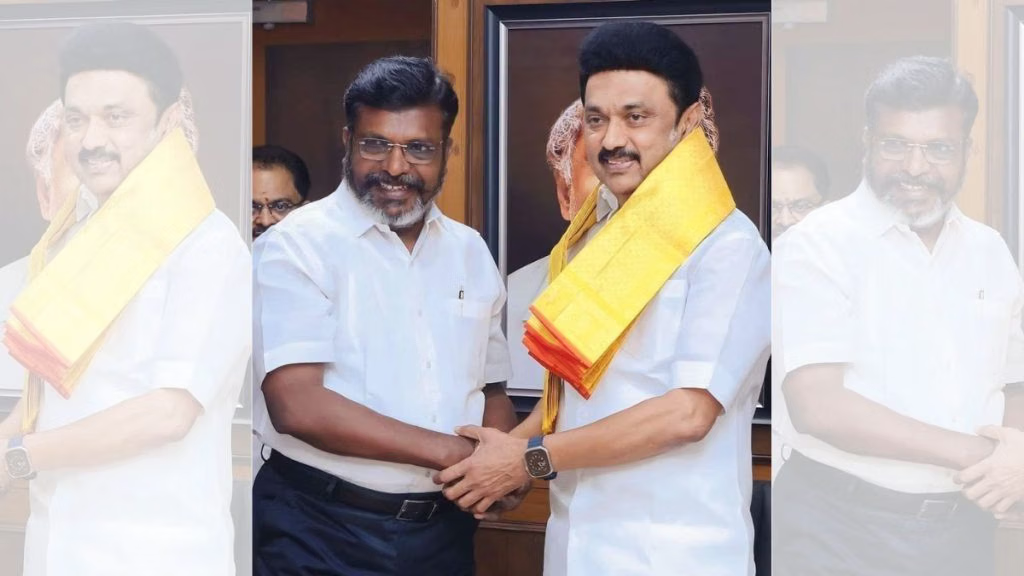
With tensions escalating in public view, DMK president M K Stalin intervened to contain the fallout. Urging party members to exercise restraint, Stalin appealed for responsible political discourse and advised cadres to avoid hurtful remarks. Reaffirming the party’s ideological lineage, he invoked the legacy of Annadurai and M Karunanidhi, stressing the need for constructive opposition politics.
The episode highlights the growing unease within the alliance framework that indirectly enabled the TVK government to assume power. While Stalin’s intervention may temporarily ease tensions, the sharp exchanges suggest deeper political undercurrents that could challenge the durability of long-standing alliances in Tamil Nadu’s evolving political landscape.