


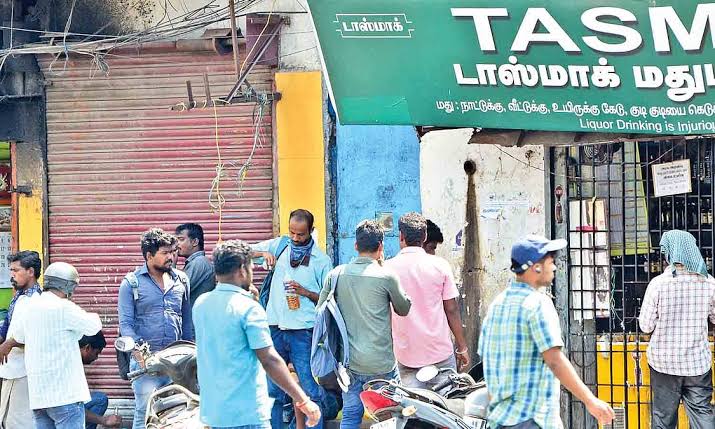
Chennai, Aug 29:
Tamil Nadu State Marketing Corporation (TASMAC) will introduce a fully automated liquor-stock indenting system for its retail outlets across the state from September 1, replacing manual submissions with dedicated handheld devices and mandatory OTP authentication.
Under the new system, supervisors of TASMAC retail shops will submit their stock requirements through handheld devices.
The move is part of the corporation’s broader effort to digitise stock management, improve accountability and ensure smoother distribution of liquor brands across retail outlets.
According to the new procedure, the system will automatically generate the eligible stock quantity for each shop based on specific brands and pack sizes.
Shop supervisors will not be permitted to reduce the system-generated base quantity. However, they will be allowed to increase the order by up to 20 per cent depending on local demand.
Supervisors can also add registered brands that are not included in the automated list if there is demand for those products in a particular locality.
A key feature of the new system will be mandatory OTP authentication. Final stock indent submissions will require a one-time password sent to the registered mobile number of the designated shop supervisor.
Once quantities are confirmed through the system, the order will be treated as final and sent directly to the concerned depot for dispatch.
The new process will also eliminate physical submission of indents at District Manager offices.
TASMAC had already achieved end-to-end computerisation across its 38 districts and depots in mid-2025. The latest initiative is intended to build on that digital infrastructure and reduce paperwork and possible supply bottlenecks.
A pilot phase is currently being conducted ahead of the September 1 rollout. During the pilot, printed copies signed by district managers are being processed to assess the performance of the new system.
Officials expect the technology-driven system to improve transparency in stock allocation and enable shops to better match supplies with local consumer demand.