


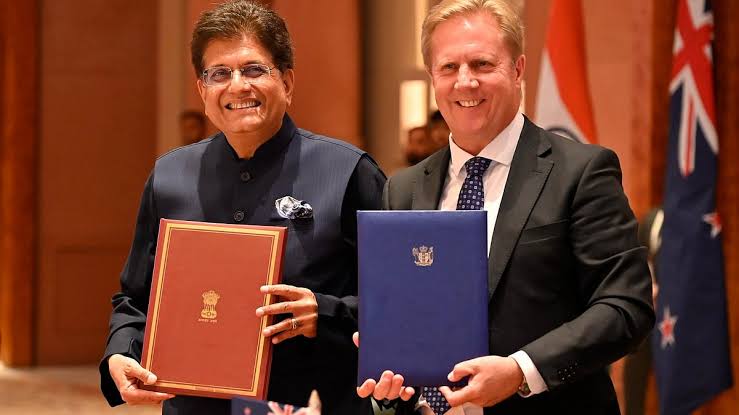
New Delhi, Sept 22:
The India-New Zealand Free Trade Agreement (FTA) will come into force on October 20, opening a new phase in economic ties between the two countries and providing duty-free access to New Zealand for 100 per cent of Indian exports from the first day of implementation.
Commerce and Industry Minister Piyush Goyal announced the implementation date after India and New Zealand completed their respective domestic procedures for ratifying the agreement. The pact was signed on April 27 and is aimed at expanding bilateral trade in goods and services, facilitating investments and creating greater opportunities for businesses in both countries. New Zealand’s Parliament passed the legislation required to implement the agreement on September 16.
The agreement is particularly significant for Indian exporters as all Indian exports to New Zealand will receive duty-free access from day one. The sectors expected to gain include textiles, apparel, leather and footwear, engineering goods, pharmaceuticals, chemicals, agricultural and processed food products, plastics and other manufactured goods. The removal of tariffs is expected to improve the competitiveness of Indian products in the New Zealand market and widen opportunities for Indian manufacturers and exporters.
For New Zealand, the agreement provides a phased reduction or elimination of tariffs on a large share of its exports to India. Around 95 per cent of New Zealand exports by value will eventually receive either tariff elimination or significant tariff reductions. About 57 per cent of New Zealand exports will become tariff-free from the beginning, including products such as sheep meat, wool and coal, while more than 95 per cent of forestry and wood exports will also receive immediate duty-free access. The duty-free coverage is expected to rise to 82 per cent over time, with tariff reductions for much of the remaining trade.
The agreement also provides preferential quota arrangements for selected New Zealand products, including apples, kiwifruit and albumins. Wine tariffs will be reduced substantially over a 10-year period, depending on the value of the product. At the same time, the pact protects certain sensitive areas through negotiated tariff treatment and safeguards, reflecting the interests of both countries in opening markets while protecting vulnerable sectors.
Investment is another major component of the agreement. New Zealand has committed to facilitate investments of up to USD 20 billion in India over the next 15 years. The investment commitment is expected to create opportunities across sectors and complement the expansion of merchandise and services trade. The agreement also contains provisions aimed at improving professional mobility, including opportunities for students and workers, thereby adding a services and human-capital dimension to the trade relationship.