


Washington, Oct 17:
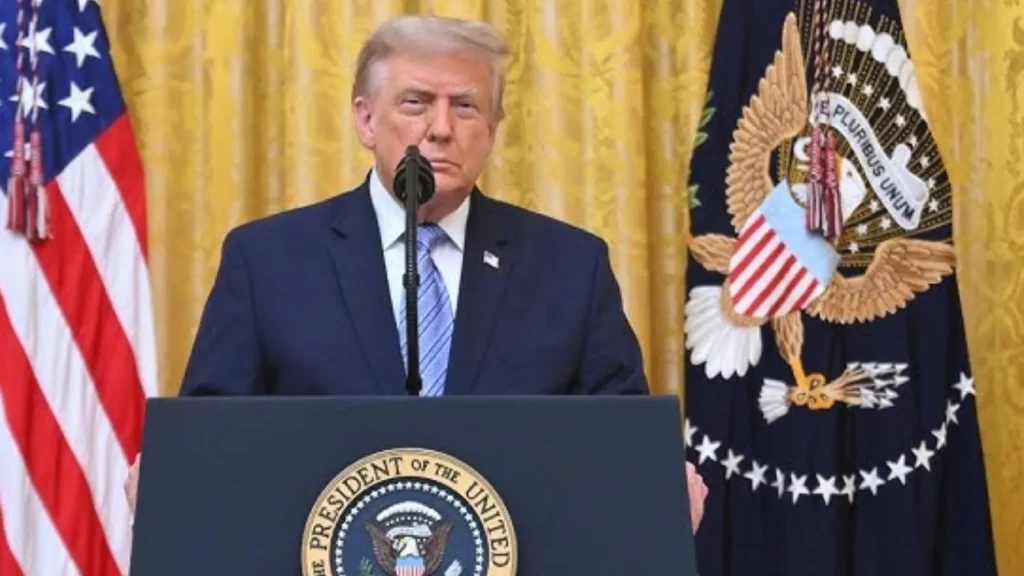
US President Donald Trump has waived the implementation of several Russia-related sanctions and tariffs that could have affected India, China and other major buyers of Russian crude, announcing the decision a day before the proposed measures were due to take effect.
Trump said the suspension was in the national interest of the United States. However, the move does not permanently cancel the proposed penalties, leaving the administration with the option of implementing them at a later stage.
In an executive order released late Friday, Trump said he had waived the application of sanctions, restrictions and duties provided for under the legislation concerned. He also said he had submitted a certification to Congress stating that the waiver was in the national interest of the United States.
The decision represents a significant development in Washington’s approach to Russia’s energy trade and could offer temporary relief to countries that continue to purchase Russian crude oil. India and China, two of the world’s major energy consumers, have faced the prospect of additional trade pressure over their purchases of Russian oil.
The proposed legislation, identified in the supplied account as the Lindsey O. Graham Sanctioning Russia and Iran Act of 2026, would have given the President 30 days to impose tariffs of up to 100 per cent on goods imported from the five leading buyers of Russian crude identified in the measure: China, India, Slovakia, Hungary and Azerbaijan. It also provided for sanctions against numerous Russian entities.
The proposed tariffs were intended to increase the economic cost of purchasing Russian energy and put pressure on Moscow over its continuing war against Ukraine. By targeting countries buying Russian crude, the measure sought to discourage trade that could provide revenue to the Russian government.
For India, the prospect of a 100 per cent tariff carried potentially serious implications. Such a measure could have increased the cost of Indian goods entering the American market, weakened the price competitiveness of exporters and complicated commercial ties between the two countries.
India has important trade links with the United States across sectors including engineering goods, textiles, pharmaceuticals, chemicals and information technology services. A steep increase in import duties could have affected exporters’ margins and created uncertainty for businesses dependent on American customers.
The potential impact on China was also significant because of the scale of its manufacturing exports to the United States. The inclusion of Slovakia, Hungary and Azerbaijan highlighted the wider international reach of the proposed measures, extending beyond the two largest Asian buyers of Russian oil.
The waiver nevertheless leaves considerable uncertainty. By suspending implementation rather than cancelling the underlying measures, Trump has retained the possibility of applying the tariffs and sanctions in the future. Governments and businesses therefore cannot assume that the threat has been permanently removed.
The timing of the decision is particularly noteworthy, coming just before the proposed penalties were due to take effect. It indicates that the administration has chosen to delay the measures at this stage, even as pressure continues over Russia’s energy exports and the financing of its war effort.
The decision also raises questions about how Washington will balance its efforts to pressure Moscow with the economic consequences for major trading partners. Imposing steep tariffs on countries purchasing Russian crude could create tensions with those governments and affect American businesses that rely on imported goods or international supply chains.
For India, the immediate suspension could provide some breathing room for exporters and policymakers. However, the longer-term outlook will depend on whether the administration extends the waiver, introduces fresh conditions or eventually activates the proposed penalties.
The executive order’s national-interest justification gives the administration room to defer the measures while retaining its broader policy options. The move should therefore be viewed as a suspension of the proposed action rather than a permanent reversal of the threat.
As the United States continues to use trade restrictions and sanctions as instruments of foreign policy, India’s energy procurement decisions and its commercial relationship with Washington are likely to remain closely linked to developments in the Russia-Ukraine conflict.
Editorial verification note: The fifth article is based on the material you supplied. Before publication, verify the exact title and status of the legislation, the executive order, the list of targeted countries and the reported 100 per cent tariff. These are consequential claims, and the supplied text alone does not independently establish them.