


Istanbul, Oct 17:
Severe flooding in Istanbul has killed four people, with Turkiye’s interior minister describing the disaster as the city’s worst flood emergency in more than 80 years.
The flooding followed intense rainfall that battered the country’s largest city, home to around 16 million people. According to the state-run Anadolu Agency, the volume of rain recorded during the 48 hours leading up to Thursday morning exceeded the combined historical average for September and October.
Interior Minister Mustafa Ciftci said the scale of the disaster was unprecedented in recent decades. Speaking during a visit to one of the worst-affected areas on Friday, he described the situation as the biggest flood disaster since 1942 and said authorities were working to assist affected residents.
The death toll rose after the body of a 66-year-old man was discovered beneath a bridge in Istanbul’s Sariyer district on Friday. Three other deaths had been reported earlier, including that of a teenager who was electrocuted during the storm.
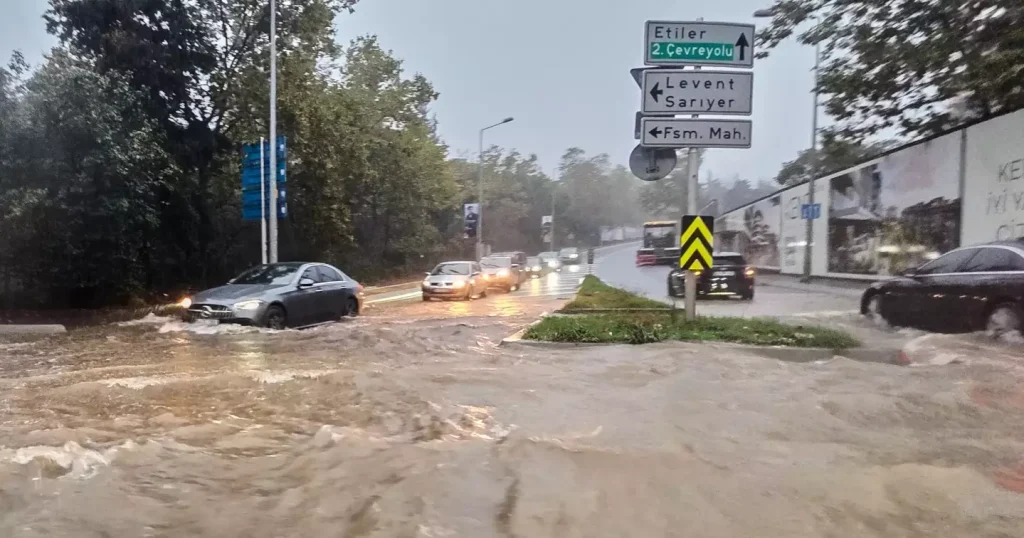
The torrential rain caused widespread disruption across the city. Water inundated residential neighbourhoods, commercial establishments, streets and public parks, while several vehicles were swept away by the powerful currents. Some vehicles were carried down slopes and piled up at the bottom of hills, illustrating the force of the floodwaters.
Before the discovery of the latest victim, Ciftci said four people remained missing. Rescue and emergency teams were continuing their efforts while authorities assessed the damage and worked to restore affected areas.
The interior minister said officials had received 9,850 reports relating to damage and other problems caused by the floods. Around 46,000 personnel were deployed for cleanup operations, debris removal and assistance to residents. The large-scale mobilisation reflected the challenge of responding to flooding across a densely populated metropolitan area.
Environment, Urbanisation and Climate Change Minister Murat Kurum accompanied Ciftci during the visit to the affected neighbourhoods. The flooding also renewed concerns about urban development near waterways and the capacity of drainage systems to handle exceptionally heavy rainfall.
Responding to questions about construction close to waterways, Kurum said addressing the issue was essential. He also linked the disaster to the wider effects of climate change, stressing the need for measures to limit its impact.
Kurum is due to chair the United Nations climate change conference, COP31, scheduled to take place next month in Antalya, Turkiye.
The disaster has once again highlighted the vulnerability of major cities to extreme rainfall, particularly where dense development, transport networks and residential areas intersect with flood-prone waterways.
As emergency crews continue clearing debris and assisting residents, authorities face the immediate task of assessing losses and restoring normalcy. The death toll and the scale of damage have placed renewed attention on flood preparedness, urban planning and climate resilience in Istanbul.