


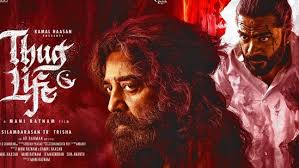
 Even two weeks after its theatrical release, Kamal Haasan’s latest film Thug Life, directed by Mani Ratnam, continues to face a ban in Karnataka, triggered by a controversy surrounding Haasan’s remarks on the Kannada language. The Supreme Court of India has now stepped in, seeking a response from the state government regarding threats and violence allegedly aimed at obstructing the film’s screening.
A Vacation Bench comprising Justices Prashant Kumar Mishra and Manmohan has issued notices to the Chief Secretary of Karnataka, the Principal Secretary (Home), and the Director General of Police, calling for urgent action to ensure law and order and protect the rights of the filmmakers.
The court was acting on a writ petition filed by M. Mahesh Reddy, a resident of Bengaluru, who pointed out that Thug Life has been blocked from releasing in Karnataka despite being cleared by the Central Board of Film Certification (CBFC). Reddy’s legal representative, Advocate A. Velan, argued that the obstruction was a blatant violation of Article 19(1)(a) of the Indian Constitution, which guarantees the freedom of speech and expression, as well as Article 19(1)(g), which ensures the right to practice any profession.
According to the petition, the disruption stemmed not from any legal prohibition but from a “deliberate campaign of terror,” including threats of arson, mob violence, and incitement targeting linguistic minorities. Velan emphasized that this atmosphere of intimidation goes beyond censorship and enters the realm of threats to secularism and public order.
The Supreme Court’s intervention raises critical questions about the Karnataka government’s role in maintaining law and order. The bench directed state authorities to respond to the allegations and clarify the steps taken to ensure the film’s smooth and lawful release. The matter has been posted for further hearing on Tuesday, June 17.
Amid the row, Thug Life’s producers, Raaj Kamal Films International, approached the Karnataka High Court, requesting security assistance. While the court acknowledged the concern, it suggested that Kamal Haasan issue a public apology to ease tensions — a recommendation that the actor-politician has refused to accept.
The controversy stems from Haasan’s comments about the Kannada language’s roots, which some groups in Karnataka have deemed offensive. This backlash has led to protests and threats that have effectively halted the film’s release in the state.
Meanwhile, the film—marking the much-anticipated reunion of Kamal Haasan and Mani Ratnam after 38 years—has seen mixed reviews across the country. While praised for its technical finesse and intense storytelling, reactions to the film have been divided, adding another layer of complexity to its troubled rollout.
With the Supreme Court now involved, all eyes are on the Karnataka government to uphold constitutional freedoms and restore calm, ensuring that cinema remains a space for creative expression—free from fear and violence.