


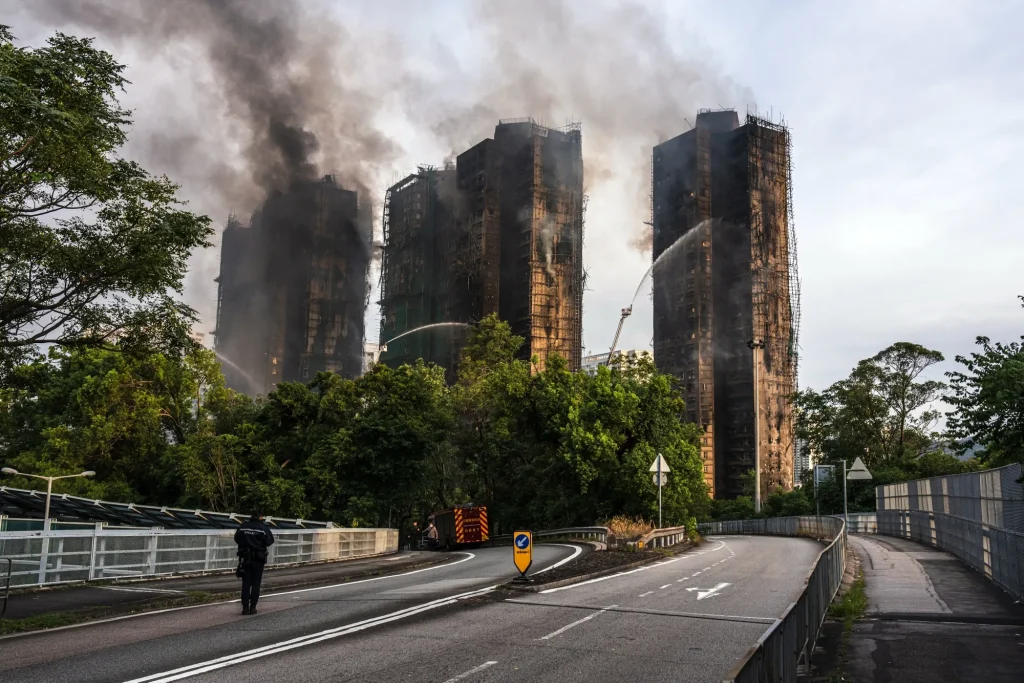
Hong Kong, Mar 20: Public hearings have begun in Hong Kong into one of the deadliest residential fires in modern history — a disaster that exposed serious questions about safety, accountability, and possible corruption. The blaze at the Wang Fuk Court housing complex last November killed 168 people, making it the worst such incident globally in decades.
A judge-led independent committee has been tasked with digging into what went wrong. The scope is broad and aggressive — from fire safety failures to construction practices, and even potential collusion between contractors and officials. This isn’t just about how the fire started; it’s about whether the disaster was preventable and who is responsible.
The fire tore through seven of the eight towers in the complex, which were undergoing renovation at the time. The buildings were wrapped in bamboo scaffolding, plastic netting, and foam materials — a combination now under scrutiny for potentially accelerating the spread of flames. What should have been standard construction practice is now being questioned as a possible catalyst for mass casualties.
For survivors, this is about more than technical findings. It’s about accountability. Former residents, including those who lost family members, are demanding clear answers and consequences. The scale of the tragedy has left little room for bureaucratic ambiguity.
Authorities are already treating this as more than an accident. Police have arrested 38 individuals on suspicion of manslaughter and six others for fraud. Separately, the city’s anti-corruption agency has detained 23 people, including contractors, consultants, and members of the building’s management body. That level of action signals a deeper systemic issue — not just isolated negligence.
The investigation will also examine whether there were irregularities in the tendering process, including bid-rigging or conflicts of interest. If proven, it would point to a chain of failures where cost-cutting and corruption may have overridden safety.
This case is now a stress test for Hong Kong’s regulatory system. If the findings confirm systemic lapses, it won’t just be about one fire — it will expose a structure that allowed it to happen.