


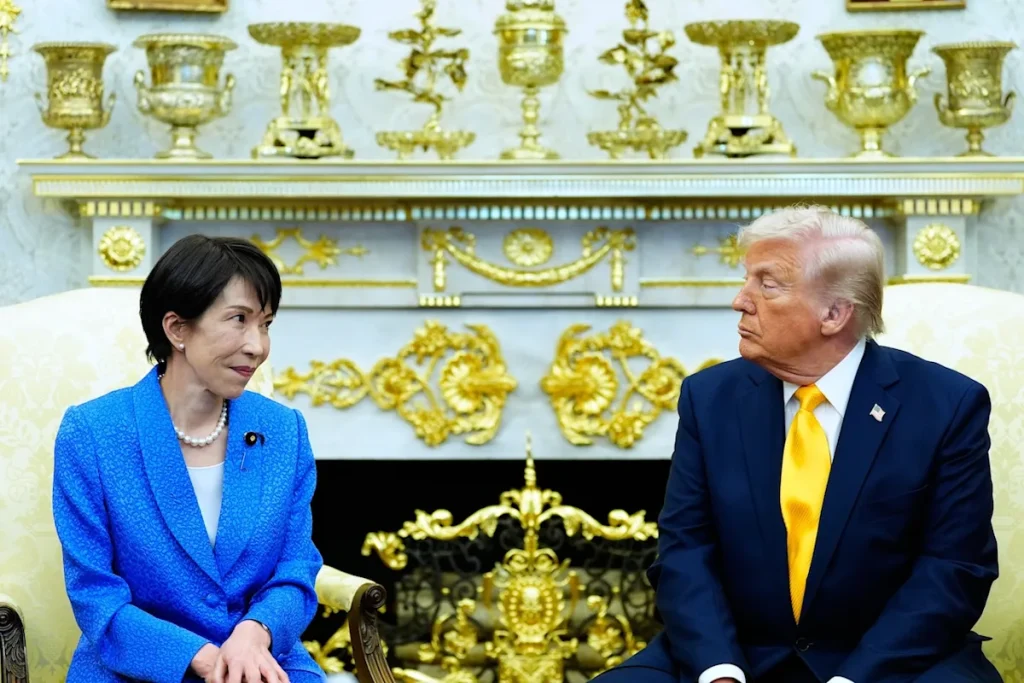
Washington, Mar 20: US President Donald Trump has triggered sharp backlash after making a controversial remark referencing the Pearl Harbor attack during a high-level meeting with Japan’s Prime Minister Sanae Takaichi.
Speaking at the White House amid rising tensions over the Iran conflict, Trump attempted to deflect a question by joking, “Who knows better about surprise than Japan?” — a comment widely interpreted as a reference to Japan’s 1941 attack on Pearl Harbor, which led to the United States entering World War II.
The remark immediately drew criticism for its tone and timing. The meeting itself was meant to reinforce diplomatic ties between two long-standing allies, particularly as global tensions escalate. Instead, the comment risked overshadowing the strategic discussions and reigniting historical sensitivities.
Diplomatically, this wasn’t just a misstep — it was unnecessary. Referencing a traumatic wartime event in a modern geopolitical context, especially in a public setting, undermines the seriousness of the moment. While no official response from the Japanese delegation indicated immediate confrontation, the discomfort was evident in broader political and public reactions.
The controversy also comes at a sensitive time, with the US deeply involved in escalating tensions in West Asia. Any sign of inconsistency or lack of diplomatic discipline from leadership can complicate already fragile international alignments.
This isn’t an isolated pattern. Trump has a history of using blunt, off-the-cuff remarks in formal settings, often blurring the line between casual rhetoric and official diplomacy. While this approach resonates with certain domestic audiences, it carries risks on the global stage, where messaging is scrutinised for both intent and implication.
The core issue isn’t just the joke — it’s what it signals. At a time when alliances matter more than ever, remarks like these introduce avoidable friction. Diplomacy relies on precision, especially in tense geopolitical climates. Deviating from that doesn’t just create headlines — it creates consequences.
Whether this moment fades quickly or leaves a lasting dent in US-Japan relations depends on what follows. But the damage, at least in perception, is already done.