


Chennai, June 5:
In a significant political development in Tamil Nadu, former state Bharatiya Janata Party (BJP) chief K Annamalai has announced the launch of a new political movement shortly after formally resigning from the party.
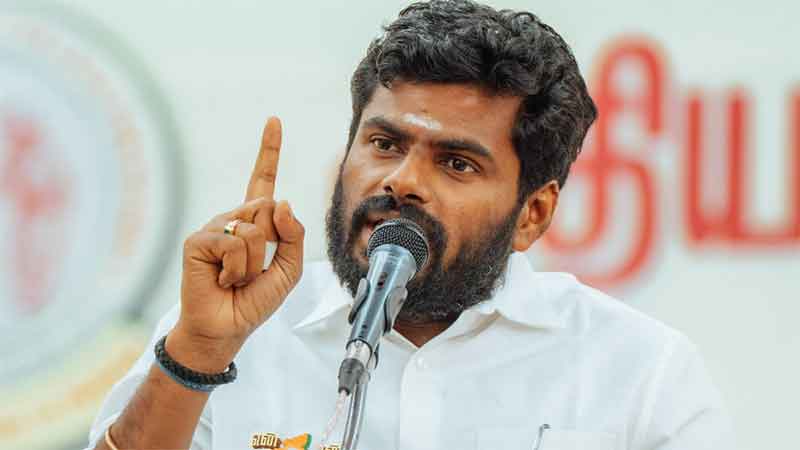
Addressing the public via video conferencing on Friday, Annamalai described the move as a “new beginning” and indicated that the movement would soon evolve into a full-fledged political party aimed at contesting the upcoming Assembly elections.
Framing his exit as a respectful and thoughtful decision, Annamalai said, “This is going to be a new beginning. I wanted to leave with respect,” while underlining his intention to create a new model of governance rooted in better politics and administration.
Vision for a New Political Alternative
Outlining his vision, Annamalai said the proposed movement would focus on grassroots development, cadre building, and empowering ordinary citizens to take up leadership roles. “This will be a people’s movement with dynamic ideas and ideologies. We are going to train common people to become political leaders,” he said.
He also announced plans to establish a “Centre for Politics and Ethics” in Coimbatore and launched a digital platform, Wetheleader.org, inviting volunteers to join and contribute to the initiative.
Reflecting on his political journey, Annamalai noted that he began his career with Vijayakanth’s DMDK before joining the BJP. He described his stint in the BJP as a period of learning, likening it to an “internship,” while maintaining that he consistently worked for Tamil Nadu’s welfare, culture, and people over the past six years.
He also recalled his interaction with actor Rajinikanth before joining the BJP, stating that he had weighed multiple factors before making his decision at the time and expressed continued respect for the superstar.
Annamalai revealed that his decision to quit the BJP followed prolonged disagreements with the party’s top leadership over the past 18 months. In his resignation letter submitted on May 2 to BJP president Nitin Nabin, he cited differences in vision regarding Tamil Nadu’s political direction.
“I do not want to burden the leadership any further with my ongoing thoughts on the way forward,” he reportedly stated, adding that their views did not align on key issues concerning the State.
Despite stepping down, Annamalai expressed deep respect for Prime Minister Narendra Modi and clarified that his exit was not intended to create difficulties for the party. He reiterated that he had advocated for the BJP to contest elections independently in Tamil Nadu without alliances.
Addressing questions around identity politics, Annamalai asserted that he is both a proud Tamilian and an Indian. He emphasized that his political approach would balance regional aspirations with national integrity.
He further claimed that national parties often failed to communicate in a language that resonated with the people of Tamil Nadu, suggesting that his new movement would bridge that gap through culturally rooted and growth-oriented politics.
As Tamil Nadu’s political landscape witnesses a fresh churn, Annamalai’s new initiative is expected to generate significant interest, particularly among younger voters and those seeking an alternative political platform. With Assembly elections on the horizon, all eyes will be on how this movement takes shape and whether it can transform into a viable political force.
Political observers note that Annamalai’s grassroots emphasis and call for internal political training could differentiate his movement from traditional party structures in the State. However, they also point out that translating public interest into an organized electoral force will be a significant challenge, especially in a landscape dominated by established Dravidian parties.
The coming months are likely to test Annamalai’s organisational abilities, as he begins building networks, mobilising volunteers, and defining the ideological contours of his movement. His next steps, including formal party registration and alliances, if any, will play a crucial role in determining the movement’s long-term political impact.