

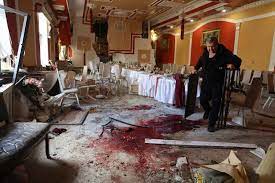
 The volatile Afghanistan-Pakistan border is a testimony to Islamabads self-inflicted wounds and its misplaced trust in adopting terrorism as its principle foreign policy tool in the neighbourhood. It has placed Pakistan in a bind from which it is finding it hard to rekindle its desire to have an ‘extended border’ on its west. Pakistan’s town of Chaman on the border with Afghanistan is ironically called Friendship Gate when there is no sign of any camaraderie between the two Muslim neighbours. The disputed border, called the Durand Line drawn up during the British colonial rule, is giving Pakistan sleepless nights. There are unending instances of fatal clashes between the armed sentries of the two countries, casualties affecting both civilians and security forces, kidnapping, hostage-taking and even seizure of the office of Pakistan’s Counter Terrorism Department in Bannu in Khyber Pakhtunkhwa province which was enlarged with the absorption of the erstwhile autonomous territories known as Federally Administered Tribal Areas (FATA). Pakistan’s latest bugbear is a Taliban franchise called Tehrik-e-Taliban Pakistan (TTP) which was born inside FATA area, and subscribes to a strict version of Islam. It vows to overthrow the government in Islamabad; it demands withdrawal of the armed forces from the erstwhile FATA areas and restoration of autonomous FATA regions. None of these demands are acceptable to Pakistan, especially since the regressive militant organization wants to rule the country. FATA was abolished for acquiring a stronger grip over the region of rebellious tribals. The amalgamation of FATA territories cannot be undone as it would amount to admission of a major failure. The government of Pakistan and TTP announced a ceasefire agreement which came into effect on November 9 to enable the two parties to work for peace. But less than a month later, the agreement was breached; the TTP has heightened the scale of its hostile acts. It is not the first time that P
Taliban franchise becomes Pakistan’s bugbear
 By Agency
🌐 Translate ▾
- Tamil
- Hindi
- Malayalam
- Kannada
- Telugu
Add A Comment