


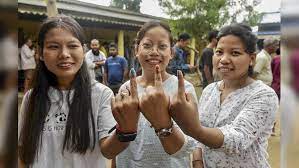
 New Delhi: As the fourth phase of voting for the Lok Sabha elections commenced on Monday, around 40% of eligible voters cast their ballots across nine states and one Union Territory by 1 pm.
This phase, which encompasses 96 Lok Sabha constituencies, witnessed significant electoral participation despite the prevailing challenges.
According to data from the Election Commission of India’s Voter Turnout app, the approximate polling percentage stood at 40.32%. Notably, West Bengal recorded the highest voter turnout at 51.87%, followed by Madhya Pradesh (48.52%), Jharkhand (43.80%), Uttar Pradesh (39.68%), and Bihar (34.44%), respectively.
The voting process encompassed a diverse array of issues, ranging from reservations and appeasement politics to corruption and employment opportunities. In addition to the parliamentary polls, assembly elections were also held for all 175 seats in Andhra Pradesh and 28 seats in Odisha.
A total of 1,717 candidates contested elections in this phase across 10 states and UTs, with 4,264 nominations filed for the 96 parliamentary constituencies. Telangana recorded the maximum number of nomination forms (1,488), followed by Andhra Pradesh with 1,103 nominations.
The Election Commission took proactive measures to enhance voter participation, including extending polling time in certain assembly segments of 17 Parliamentary constituencies in Telangana from 7 am to 6 pm.
This phase also marked a significant milestone in Kashmir, being the first major election in the region since the abrogation of Article 370 in August 2019.
Several high-profile contests captured national attention, including former Uttar Pradesh Chief Minister Akhilesh Yadav contesting from Kannauj, Union Ministers Giriraj Singh, Nityanand Rai, and Raosaheb Danve vying for victory in Bihar and Maharashtra constituencies, respectively.
Additionally, Congress leader Adhir Ranjan Chowdhury, former cricketer Yusuf Pathan, AIMIM president Asaduddin Owaisi, Andhra Pradesh Congress president YS Sharmila, and TMC’s Mahua Moitra were among the prominent candidates in contested constituencies.
As the electoral process continues to unfold, all eyes remain on the outcome of these closely contested battles, which will shape the political landscape of the nation in the days to come.