


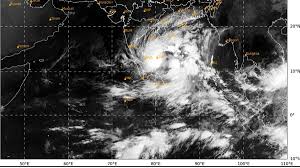
 Cyclones have always been unpredictable forces of nature, but despite significant advancements in weather technology, forecasting their movements and impacts, including landfalls, remains a daunting challenge. Both government meteorological agencies and private weather forecasters struggle with the inherent complexity of these systems, often leading to last-minute surprises.
Cyclones are driven by several dynamic factors, including atmospheric pressure, sea surface temperatures, wind patterns, and interactions with other weather systems. These factors can shift unpredictably, making it difficult to provide precise predictions.
“Cyclones are like living organisms—they evolve rapidly and often in ways that are hard to anticipate,” explains Dr. Thamarai, a former staff at the Indian Meteorological Department (IMD). “Even with satellite data and supercomputers, predicting their exact path or intensity is like solving a multi-layered puzzle.”
Modern forecasting tools, such as Doppler radars, satellite imagery, and numerical weather models, have significantly improved the accuracy of cyclone predictions over the years. Yet, these tools have their limitations.
“A slight variation in atmospheric conditions can cause a cyclone to deviate from its predicted path,” says private weather forecaster Narayanan. “We can predict general trends, but the exact timing and location of landfall can shift even hours before impact.”
Private weather forecasters, who often operate independently, face unique challenges. While they use the same data sources as government agencies, interpreting and presenting this data requires significant expertise.
“Private forecasters often aim for hyper-local predictions, which increases the risk of errors,” says weather blogger Kannan. “It’s not that the data is wrong, but the atmosphere is a chaotic system, and even small errors can lead to big differences in the final forecast.”
Inaccurate predictions can have serious consequences, from improper evacuation plans to economic losses. “Authorities often rely on forecasts to decide on relief measures,” says disaster management expert Janakiraman. “Even a few hours of delay in accurate predictions can make a difference in saving lives and resources.”
While technology is evolving, experts stress the importance of integrating local knowledge and real-time monitoring to improve accuracy. “We need better coordination between agencies, faster data processing, and public awareness about the uncertainties involved in forecasting,” he says.