


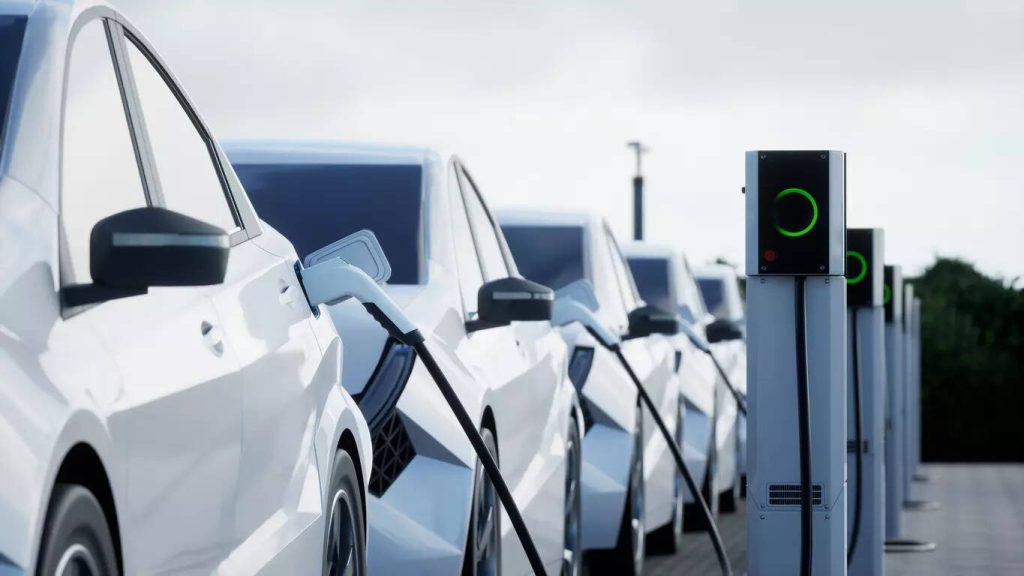
The streets of India are abuzz with a new kind of energy – the hum of electric vehicles (EVs) is growing louder, and it’s not just a whisper. The government’s pedal-to-the-metal push for EVs is transforming the transportation landscape, and the country’s roads are about to get a whole lot cleaner.
Shifting Gears:
The Indian government’s strategy to promote EVs is multifaceted, with incentives, investments, and policies aimed at making electric mobility a reality. The Faster Adoption and Manufacturing of Electric Vehicles (FAME) scheme, launched in 2015, has been a game-changer, offering incentives to manufacturers and buyers alike. The Production Linked Incentive (PLI) scheme has also enticed companies to set up shop in India, creating a robust EV ecosystem.
The numbers are promising: EV sales in India reached 1.5 lakh units in 2022-23, a staggering 300% increase from the previous year. Two-wheelers dominate the market, accounting for over 80% of total EV sales. As the market grows, so does the government’s ambition – the National Electric Mobility Mission Plan (NEMMP) aims for 30% EV sales by 2030.
Electric Vehicle Sales
January 2026 saw significant EV sales, with top models including:
– Tata Nexon EV: 3,098 units
– MG Windsor: 2,567 units
– Tata Harrier EV: 1,995 units
– Mahindra XEV 9e: 1,945 units
– Tata Tiago EV: 1,223 units
Tata Motors leads the market with a 52.4% share, followed by MG Motor and Mahindra & Mahindra.
Infrastructure and Innovation
India’s EV infrastructure is still developing, with fewer than 2,000 public charging stations. However, the government plans to set up 10,000 charging stations by 2025. Companies are investing in local battery manufacturing and advanced battery technologies to increase range and reduce costs.
Global Context
India’s EV market is growing rapidly, though it still lags behind China, which achieved 50% EV penetration in auto sales. Emerging markets are also seeing significant growth.
Projections and Challenges
India’s EV market is expected to grow exponentially, with projections suggesting 30 million EVs on the road by 2030. The government aims to achieve 30% EV sales by 2030. Challenges include high upfront costs, lack of charging infrastructure, and range anxiety.
The Road Ahead
As India accelerates towards a greener tomorrow, the EV industry is poised to play a significant role in shaping the country’s economic and environmental future. With government support, declining battery costs, and increasing consumer awareness, India’s EV revolution is gaining momentum. The industry is expected to create thousands of jobs and attract significant investments.
The government’s focus on promoting EVs is driving growth and innovation. As the country shifts gears, the future looks bright for India’s EV revolution. The transportation sector is on the cusp of a major transformation, and the world is watching.
India’s EV story is just beginning, and it’s going to be a thrilling ride. With increasing demand for sustainable transportation, the industry is poised for significant growth. The government’s initiatives are expected to make India a global hub for EV manufacturing and innovation.