


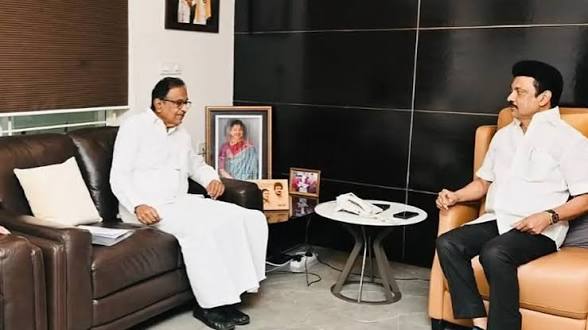
P. Chidambaram calls on MK Stalin at a crucial juncture as tensions escalate between the Indian National Congress and the Dravida Munnetra Kazhagam over seat-sharing arrangements for the upcoming 2026 Tamil Nadu Legislative Assembly election.
The high-level meeting between senior Congress leader P. Chidambaram and Tamil Nadu Chief Minister M.K. Stalin assumes significance as prolonged negotiations between the two alliance partners have failed to reach a consensus.
Seat-Sharing Deadlock
At the heart of the disagreement lies the allocation of Assembly constituencies within the DMK-led alliance. Congress has been pressing for a larger share of seats, reflecting its national stature and long-standing presence in the state. However, the DMK leadership has maintained that it must balance the aspirations of multiple allies within the coalition.
Sources indicate that the Congress sought a substantially higher number of constituencies than what the DMK was prepared to offer. The gap in expectations led to several rounds of discussions without a breakthrough. The DMK is said to have conveyed its constraints, citing commitments to other partners and its own electoral calculations.
Against this backdrop, Chidambaram’s meeting with Stalin is viewed as a serious effort to ease tensions and preserve the alliance. The veteran leader is understood to have conveyed the concerns of the Congress high command and emphasised the importance of mutual accommodation to ensure unity ahead of the polls.
The discussions reportedly centred on maintaining cohesion within the alliance and exploring possible compromises. While no official statement detailing the outcome of the meeting has been released, the engagement signals that channels of communication remain open.
The Congress and DMK are key constituents of the Secular Progressive Alliance in Tamil Nadu. Over the years, the partnership has played a crucial role in state and parliamentary elections. However, evolving political equations and competitive pressures have made seat-sharing negotiations increasingly complex. The DMK, as the dominant partner, is under pressure to allocate seats not only to Congress but also to other smaller allies in the front. Congress leaders, on their part, believe that a stronger presence in the Assembly would revitalise the party’s organisational base in the state.
The outcome of these negotiations will have a bearing on the broader electoral landscape in Tamil Nadu. A united alliance would aim to consolidate anti-opposition votes and present a cohesive front in the 2026 contest. Conversely, any prolonged discord could reshape political alignments and campaign strategies.
For now, both parties appear to be weighing their options carefully. Chidambaram’s direct engagement with Stalin underscores the seriousness of the moment and the shared recognition that alliance arithmetic will play a decisive role in the forthcoming election.
As the deadline for finalising seat allocations approaches, all eyes remain on further consultations between the two leaderships and the eventual announcement that will define the contours of the alliance battle in Tamil Nadu.