


New Delhi, May 9:
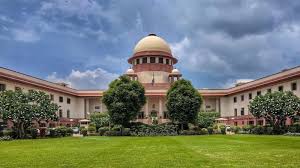
A fresh constitutional controversy has emerged in Tamil Nadu following the filing of a writ petition before the Hon’ble Supreme Court of India by Dr. M. Ramasubramani, IPS (Retd.), challenging the validity of a press release issued by Lok Bhavan, Tamil Nadu, dated 07.05.2026.
According to the petition, the Governor’s communication had stated that the claim of C. Joseph Vijay to form the government was not accepted on the grounds that majority support had not been sufficiently established. The petitioner contends that such an assessment prior to the formal constitution of the Legislative Assembly raises serious constitutional questions.
The petition argues that in a hung Assembly situation, the Governor does not have the authority to conduct a subjective or “roving inquiry” into political support before the House is convened. It further relies on established constitutional conventions and commission recommendations, including those of the Sarkaria and Punchhi Commissions, which suggest that the single largest party should ordinarily be invited to form the government and subsequently prove its majority on the floor of the House within a stipulated time.
The plea also cites key Supreme Court judgments, including S. R. Bommai v. Union of India, Rameshwar Prasad v. Union of India, Dr. G. Parameshwara v. Union of India, and Shiv Sena v. Union of India, to argue that democratic legitimacy must be tested on the floor of the Assembly rather than through pre-floor executive assessment.
The relief sought in the petition includes directions for the immediate constitution of the newly elected Legislative Assembly, administration of oath to members, and a floor test to enable the single largest party, Tamilaga Vettri Kazhagam, to demonstrate its majority in a democratic manner.
The matter has been filed before the Supreme Court and is currently pending registration and numbering. The case is expected to add a significant legal dimension to the ongoing political developments in Tamil Nadu, particularly in the context of government formation in a closely contested Assembly.