


Tehran, June 8:
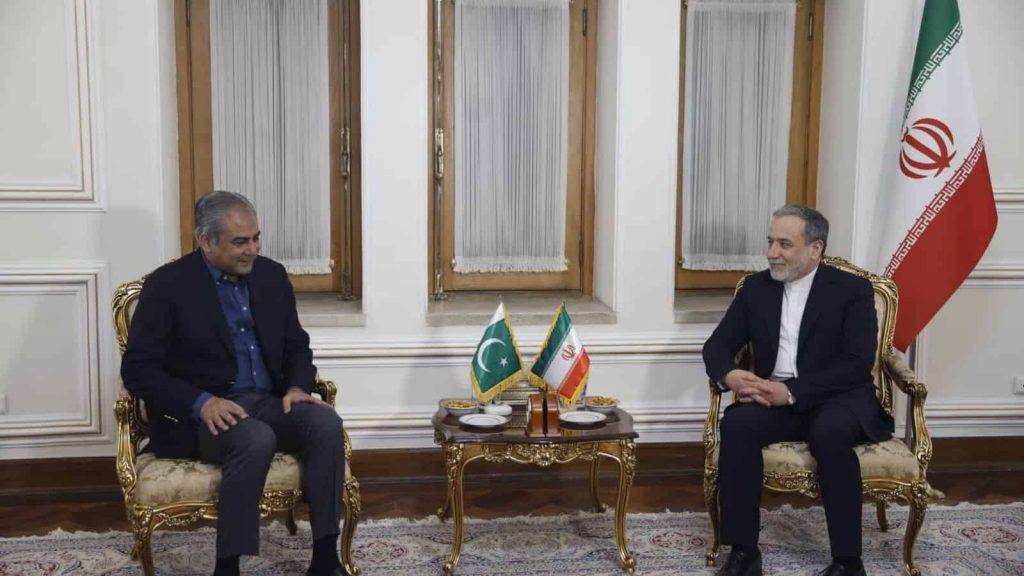
Pakistan intensified efforts to revive stalled negotiations between Iran and the United States as Interior Minister Mohsin Naqvi visited Tehran on Sunday.
His trip came amid renewed tensions in the Gulf after the US military said it had shot down two more Iranian drones over the Strait of Hormuz, a critical shipping route for global energy supplies.
According to Iranian media, Naqvi carried a message from Pakistan’s army chief, Asim Munir, to Iran’s Supreme Leader, Ayatollah Mojtaba Khamenei.
During the visit, he met Iranian Interior Minister Eskandar Momeni and Foreign Minister Abbas Araghchi.
Pakistani officials said Islamabad, with support from regional partners including Qatar, Turkey and Egypt, is working to bridge differences between Washington and Tehran and help secure the reopening of the Strait of Hormuz.
The diplomatic push comes despite a preliminary ceasefire reached on April 8 that halted the heaviest fighting in the Iran conflict.
However, efforts to achieve a lasting settlement have stalled. At the same time, violence continues in Lebanon, threatening broader regional stability.
The US military said it intercepted several Iranian missiles and drones aimed toward the Strait of Hormuz and Gulf Arab allies, while also striking Iranian coastal surveillance radar sites.
US Central Command said the drones posed an immediate threat to maritime traffic.
Iran’s Revolutionary Guard, meanwhile, claimed responsibility for attacks targeting the Ali Al Salem air base in Kuwait and the US Navy’s Fifth Fleet headquarters in Bahrain. The US reported no casualties among its personnel.
Meanwhile, fighting between Israel and the Iranian-backed Hezbollah group intensified despite a recently renewed US-brokered ceasefire.
Israel said it struck more than 150 Hezbollah targets, including rocket launchers and command centres, across southern Lebanon over the weekend.
Israeli forces also launched strikes in Beirut’s southern suburbs after projectiles were fired toward northern Israel.
Hezbollah acknowledged attacks on Israeli troops in southern Lebanon but did not claim responsibility for the rocket fire.
The ongoing clashes threaten efforts to secure a broader regional truce.
Iran insists that any lasting agreement with the US must include an end to hostilities in Lebanon, while Israeli Prime Minister Benjamin Netanyahu has vowed to continue military operations until Hezbollah no longer poses a threat.
Rising tensions have also disrupted global energy markets, with concerns over the Strait of Hormuz pushing oil prices higher and adding pressure on the world economy.