


United Nations, Sept 28:
The 81st United Nations General Assembly has entered its final phase in New York after a week dominated by the wars in the Middle East and Ukraine, global security, artificial intelligence, climate change and the future of multilateral cooperation.
Leaders from across the world used the gathering for both formal addresses and intensive diplomatic contacts on the sidelines.
The US-Iran conflict remained one of the central issues. US President Donald Trump warned Iran during his UN address that Washington could take further military action if a peace agreement was not reached. Iranian President Masoud Pezeshkian, while sharply criticising US actions, said Tehran was open to diplomacy but rejected negotiations conducted under military pressure.
The Strait of Hormuz has emerged as a particularly important concern because of its impact on international energy supplies and shipping. Iran has linked the reopening of the waterway to negotiations, while Trump has rejected a seven-day Iranian proposal to reopen the strait and resume nuclear talks. The continuing uncertainty has kept oil markets and global shipping on alert.
The Ukraine war was another major focus, with President Volodymyr Zelenskyy accusing Russia of continuing attacks and urging stronger international pressure. Russia’s Foreign Minister Sergey Lavrov, meanwhile, defended Moscow’s position before the General Assembly. UN discussions have also highlighted the wider consequences of the conflict for energy, food security and international stability.
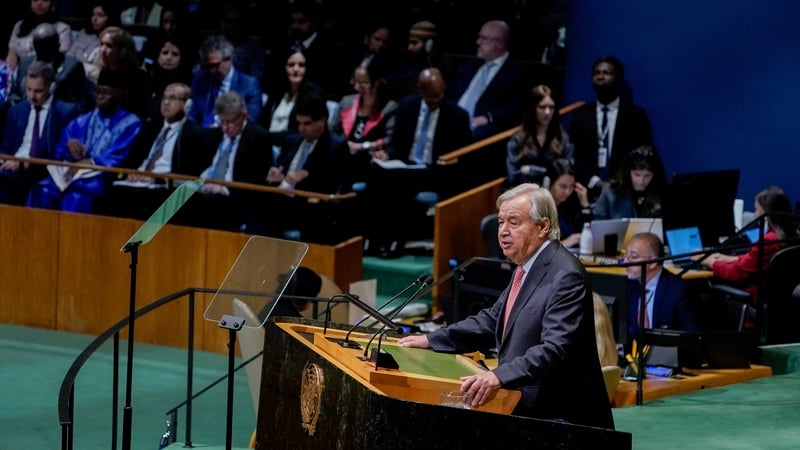
Artificial intelligence featured prominently in the discussions as governments grapple with how to regulate rapidly developing technology. UN Secretary-General António Guterres, in what is expected to be his final General Assembly address before leaving office at the end of the year, called for stronger international governance of AI and an independent framework for managing its risks.
India also used the UN platform to stress the importance of protecting commercial shipping and seafarers amid the Gulf tensions. External Affairs Minister S. Jaishankar said countries far from conflict zones were increasingly bearing the economic consequences of wars, while India continued to emphasise dialogue, international law and the protection of global trade routes.