


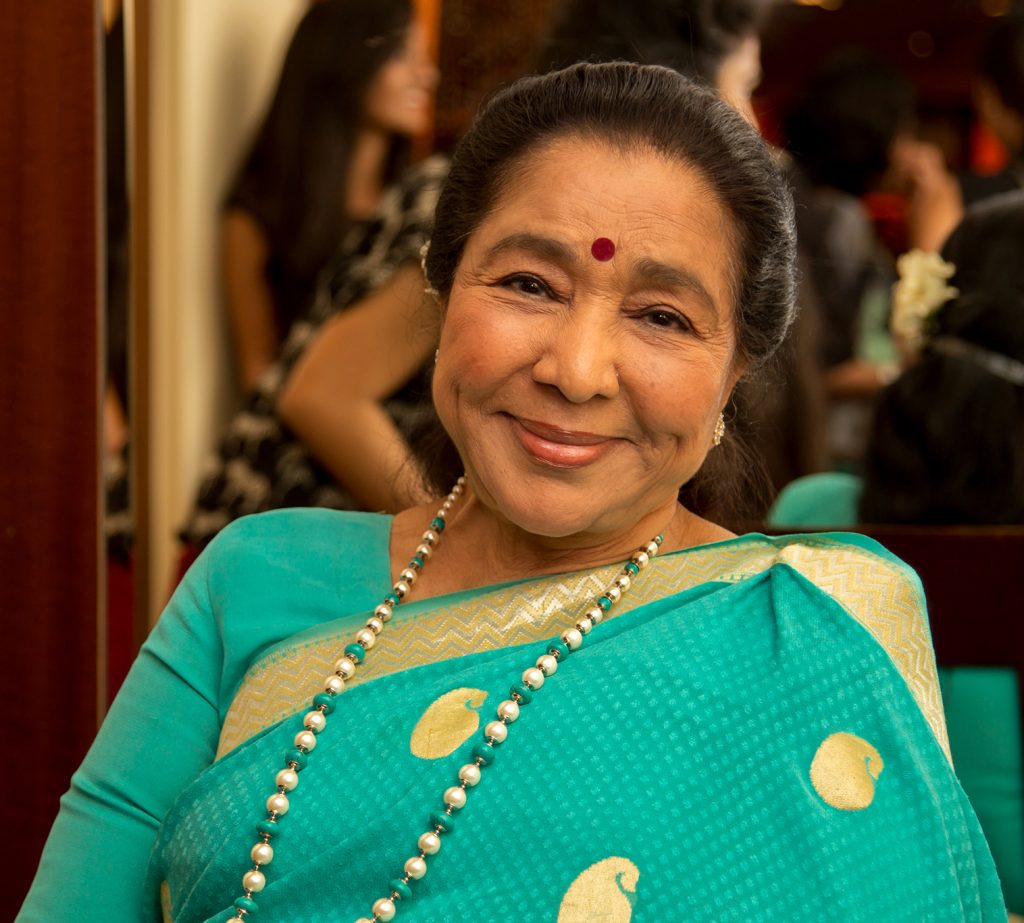
Legendary playback singer Asha Bhosle passed away in Mumbai on Sunday at the age of 92, bringing to a close an extraordinary musical journey that spanned more than eight decades.
The news was confirmed by her son, Anand Bhosle, who stated that she breathed her last at Breach Candy Hospital, where she had been admitted on April 11 due to extreme exhaustion and a chest infection. He added that members of the public would be able to pay their last respects at her residence, with the final rites scheduled to be held at Shivaji Park.
Asha Bhosle began her career at the age of 10, making her debut with “Chala Chala Nav Bala” in the Marathi film Majha Bal (1943). She entered Hindi cinema with “Saawan Aaya” in Chunariya (1948), but her major breakthrough came with Naya Daur (1957), where songs such as “Maang Ke Saath Tumhara” and “Uden Jab Jab Zulfein Teri” brought her widespread recognition. At a time when stalwarts like her sister Lata Mangeshkar, Shamshad Begum and Geeta Dutt dominated the industry, Asha Bhosle went on to record more songs than any other female singer of her era, establishing a distinct identity with her bold, versatile, and experimental singing style.
She became especially known for her Western-influenced and cabaret numbers, delivering iconic tracks in films like Teesri Manzil, composed by her husband R. D. Burman. Her collaborations for dancer Helen produced evergreen hits such as “Piya Tu Ab Toh Aaja” (Caravan, 1971) and “Yeh Mera Dil” (Don, 1978), which remain benchmarks in Hindi film music. Refusing to be confined to a single genre, she showcased remarkable range, with her ghazals in Umrao Jaan earning her a National Award, followed by another for “Mera Kuchh Saamaan” from Ijaazat (1987). Even in her later years, she continued to remain relevant, lending her voice to a new generation with popular tracks like “Rangeela Re,” “Radha Kaise Na Jale,” and “Kambakht Ishq.”
Beyond playback singing, Asha Bhosle explored independent music and global collaborations, working with artistes such as Adnan Sami and Ustad Ali Akbar Khan, with her album Legacy earning a Grammy and You’ve Stolen My Heart bringing further international acclaim.
She also ventured into acting with Mai (2013), portraying a mother suffering from Alzheimer’s disease. Recording in multiple Indian languages including Marathi, Bengali, Tamil, Telugu, Kannada, Malayalam and Punjabi, she earned a place in the Guinness World Records for the most studio recordings and was honoured with prestigious awards such as the Dadasaheb Phalke Award and the Padma Vibhushan.
Though her Tamil repertoire was relatively limited, Asha Bhosle left a lasting impression with memorable songs such as “Senbagame Senbagame” from Enga Ooru Pattukaran and “O Pattampoochi” from Meera, both composed by Ilaiyaraaja, as well as “September Maadham” from Alaipayuthey and “Konjam Neram,” composed by A. R. Rahman, along with “Nee Partha Vizhi” from Hey Ram. These songs continue to be cherished by Tamil audiences, reflecting her effortless ability to transcend linguistic and cultural boundaries.
With her passing, Indian music has lost one of its most versatile and enduring voices, but her timeless songs will continue to resonate across generations.