


New Delhi, Apr 16:
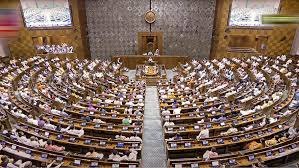
The Union government on Thursday introduced the Women’s Reservation Bill in the Lok Sabha, marking a significant legislative push during the ongoing special session of Parliament, even as the move sparked sharp reactions from the Opposition over the accompanying delimitation proposal.
Union Minister for Law and Justice Arjun Ram Meghwal initiated the debate by presenting the Constitution (One Hundred and Thirty-First Amendment) Bill, 2026, which seeks to provide one-third reservation for women in legislative bodies. Alongside this, the government also tabled the Delimitation Bill, 2026, bringing electoral boundary restructuring into the legislative spotlight.
Adding to the day’s agenda, Union Home Minister Amit Shah introduced the Union Territories Laws (Amendment) Bill, 2026, expanding the scope of discussions in the special session.
Opposition raises strong objections
The introduction of the three Bills triggered immediate protests from the Opposition benches. Congress MP K. C. Venugopal formally opposed all the legislations, accusing the government of attempting to undermine constitutional principles.
“The government wants to completely hijack the Constitution,” he said, registering his party’s dissent in the House.
Responding to the criticism, Parliamentary Affairs Minister Kiren Rijiju and Amit Shah clarified that the Bills had only been introduced and detailed discussions would take place in due course.
Support for women’s quota, opposition to delimitation
Congress MP Karti Chidambaram drew a clear distinction between the two key issues, stating that his party supports the Women’s Reservation Bill but opposes the proposed delimitation exercise.
He indicated that the INDIA bloc would vote against any delimitation-related proposal, suggesting that the government may face challenges in securing sufficient support for its passage.
Karti Chidambaram also questioned the timing of the special session, alleging political motives behind convening Parliament amid ongoing election campaigns in states like Tamil Nadu and West Bengal.
“This clearly reflects the government’s underhanded agenda,” he said, accusing the Centre of attempting to disrupt opposition campaigns in key poll-bound states.
Government confident of consensus
Union Minister Giriraj Singh expressed confidence that the Women’s Reservation Bill would be passed with broad support despite opposition concerns.
He said all parties would ultimately back the legislation, emphasising that women across the country have been waiting for such a measure for years.
Dismissing apprehensions over delimitation leading to regional imbalance, Giriraj Singh asserted that there would be no discrimination against any state and that equality would be ensured in the implementation process.
Debate set to intensify
With the introduction of the Bills, Parliament is set for an intense debate in the coming days, as political parties draw clear lines between support for women’s representation and concerns over electoral restructuring.
While the Women’s Reservation Bill appears to have wider political backing, the delimitation proposal is emerging as a contentious issue, potentially shaping both parliamentary proceedings and the broader political discourse in the run-up to elections.