

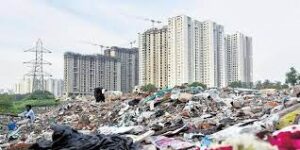
 Illegal dumping of garbage has long been a persistent issue in Chennai, despite concerted efforts by the Greater Chennai Corporation (GCC) to address the problem. In response to the ongoing challenge, the Solid Waste Department of GCC has recently issued a circular, outlining steps to combat illegal dumping of garbage and debris, particularly in water bodies within the city’s limits. A crucial step in this initiative is the formation of a Regional Enforcement Team, tasked with monitoring and preventing the illegal dumping of garbage. The circular, issued on December 20, directed the regional offices in north, central, and south Chennai to establish teams. These teams, led by zonal assistant executive engineers, will consist of SWM and conservancy supervisors, conservancy inspectors, sanitary inspectors, tax collectors, and other relevant officials. The primary responsibility of the Regional Enforcement Team is to monitor areas prone to illegal dumping, specifically in water bodies like Cooum and Adyar, both maintained by the GCC. The team will have the authority to impose fines as a deterrent against illegal disposal of garbage and debris. The Greater Chennai Corporation oversees an impressive network of 33 canals spanning a total length of 53,421 meters within the city. Chief Engineer N. Mahesan emphasized collaborative efforts with the Public Works Department (PWD) and Water Resources Department (WRD), alongside support from private agencies. The GCC has employed advanced methods, including amphibian equipment and robotic multipurpose excavators, for desilting works to maintain water bodies. Highlighting their commitment to environmental stewardship, the GCC reported the removal of approximately 1,231 tonnes of water hyacinth and 1,897 tonnes of construction waste over the past 56 months. This concerted effort demonstrates the civic body’s dedication to preserving the city’s water bodies and combating the adverse effects of illega
Chennai takes measures to combat illegal dumping
 By NT Bureau
🌐 Translate ▾
- Tamil
- Hindi
- Malayalam
- Kannada
- Telugu
Add A Comment