


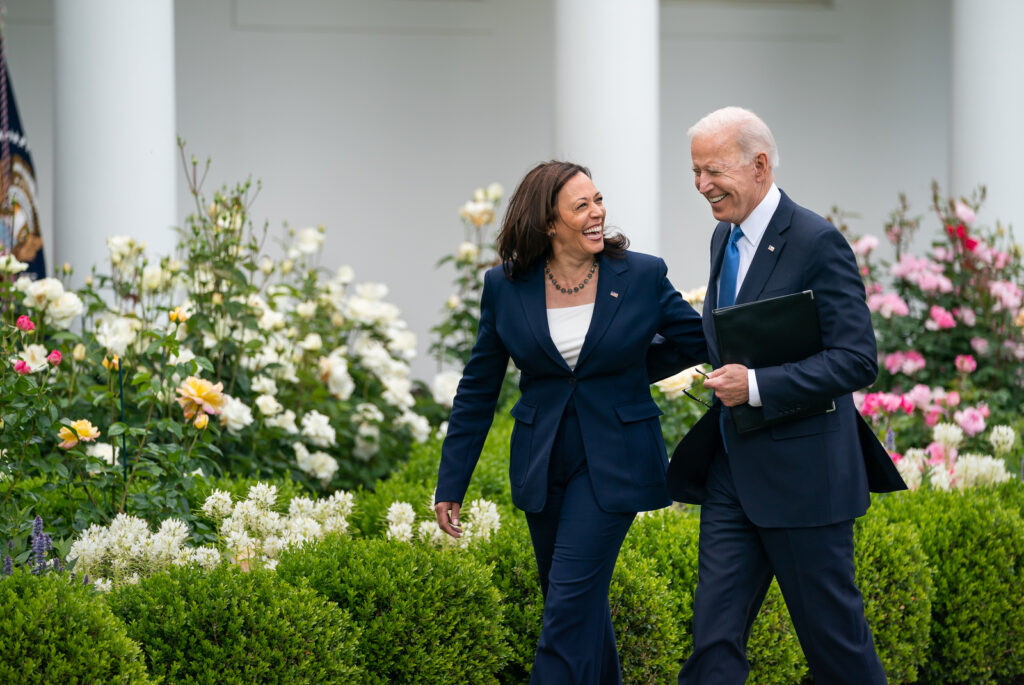
In a historic and unexpected move, President Joe Biden has announced his withdrawal from the 2024 presidential race, endorsing Vice President Kamala Harris as the Democratic nominee. This decision, made public in a heartfelt letter and reinforced by Biden’s social media endorsement, comes at a critical juncture in American politics, just four months before the November election.
In his letter, Biden stated, “While it has been my intention to seek re-election, I believe it is in the best interest of my party and the country for me to stand down and focus solely on fulfilling my duties as president for the remainder of my term.” He praised Harris, calling her his best decision as vice-president and affirming his full support for her candidacy. Biden also promised to address the nation in more detail later this week.
Harris responded with a statement acknowledging Biden’s leadership and the gravity of his decision. “With this selfless and patriotic act, President Biden is doing what he has done throughout his life of service: putting the American people and our country above everything else,” Harris said. She expressed her determination to earn the nomination and unite the Democratic Party to defeat former President Donald Trump and his agenda.
The decision comes amid intense pressure from within the Democratic Party. Over recent weeks, numerous Democratic leaders, organizers, and donors had urged Biden to withdraw, arguing that his candidacy faced insurmountable challenges. Polls indicated a growing consensus among Democrats for a change in leadership. An ABC News/Ipsos poll released shortly before Biden’s announcement found that 60% of Democrats believed he should end his campaign. Among those surveyed, 76% were supportive of Harris as a viable alternative.
Former President Barack Obama, who had previously appointed Biden as his vice-president, lauded Biden’s decision. “Joe Biden has been one of America’s most consequential presidents, as well as a dear friend and partner to me,” Obama said. He highlighted Biden’s dedication to the country and his willingness to make a tough decision for the greater good. The Clintons also voiced their support for Harris, with Bill and Hillary Clinton issuing a joint statement pledging to assist in Harris’s campaign.
The timing of Biden’s withdrawal poses significant challenges for the Democratic Party. The national convention, scheduled to begin on August 19 in Chicago, will be a pivotal moment as the party formalizes its nominee. Although Harris is the most prominent figure now in the race, there are other potential contenders, such as Michigan Governor Gretchen Whitmer and California Governor Gavin Newsom, who could theoretically challenge her. However, as of now, neither Whitmer nor Newsom appears to be preparing a bid, leaving Harris as the likely nominee.
Republican reactions have been mixed. Former President Trump, who is seeking a return to the White House, suggested that Harris might be a weaker opponent compared to Biden. Trump and his running mate, JD Vance, have both called for Biden’s resignation from the presidency, a move Biden is unlikely to consider. Trump’s comments reflect his belief that Harris may be more vulnerable in the general election.
Biden’s exit from the race, while he remains in office until January, marks a significant turning point in the 2024 election cycle. The Democratic Party now faces the dual challenge of rallying behind Harris and preparing for a campaign against Trump and Vance, all within a compressed timeline. The party’s ability to unify and effectively support Harris will be crucial as the election approaches, setting the stage for what promises to be a highly contentious and pivotal election.