


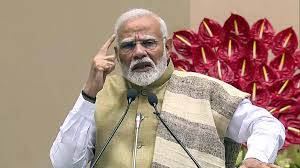
 Prime Minister Narendra Modi convened an emergency meeting of the Cabinet Committee on Security (CCS) to discuss the escalating crisis in West Asia.
The CCS, which includes the PM, Home Minister, Defense Minister, Foreign Minister, Finance Minister and National Security Adviser, examined the recent hostilities in the Middle East and their potential implications.
They expressed concern over these developments and their potential impact on trade, navigation, and supply chains—particularly oil and petroleum products.
Describing the recent developments in West Asia as “deeply concerning”, the highest committee in the country delved upon various issues arising from the ongoing and widening crisis.
Among several key issues, they discussed the impact on trade, navigation, and supply chains – especially the supply of oil, petroleum, and its products.
India has urged all parties involved in the conflict to address all issues urgently, and through diplomacy and dialogue. New Delhi has also said that the ongoing conflict “must not take a wider regional dimension.”
A conflict doesn’t just affect those who are party to it, but has a fallout that impacts the rest of the region and even the world. With the sharp escalation between Iran and Israel, India is bracing for wider trade disruptions across the key Red Sea and Gulf of Aden routes.
The conflict can lead to significantly higher cargo freight tariffs as Lebanon’s Iran-backed Hezbollah militants have close ties with the Houthi rebels in Yemen, who are responsible for most attacks on merchant ships and vessels carrying cargo via the Red Sea and Gulf of Aden routes.
The Red Sea crisis began in October last year, when Iran-backed Houthi militia disrupted global trade in the area. For India alone, it affected petroleum exports which dropped 37.56 per cent to $5.96 billion in August this year, down from $9.54 billion in the same month last year.